Content Strategy
How to Get Brand Deals with Under 10K Followers (The Micro-Influencer Guide)
October 10, 2026
Stop losing viewers in the first 5 seconds! Learn to craft viral hooks that grab attention, boost retention, and explode your views.
Attention is the currency of social platforms — and you only get a tiny window to earn it. In the noisy scroll economy, the first 5 seconds decide whether someone keeps watching, scrolls past, or clicks away. Nail that mini-window and you dramatically raise views, retention, and the chance a video goes viral.
Across short-form platforms and long-form video alike, audience behavior concentrates at the start. Platforms reward content that retains a high percentage of viewers early; on TikTok and Reels, a strong opening can be the difference between 20% and 60% retention after 5 seconds — which directly impacts distribution. On YouTube, the first 15 seconds heavily influence the algorithm’s decision to promote a video into suggested feeds.
Set practical benchmarks: aim for at least 50% retention at 5 seconds for short clips and >40% retention for long-form intros. If you’re consistently under these numbers, your opening needs work. Those small percentage improvements compound: a 10-point lift in 5-second retention can double the watch time and increase the chance of landing on discovery surfaces.
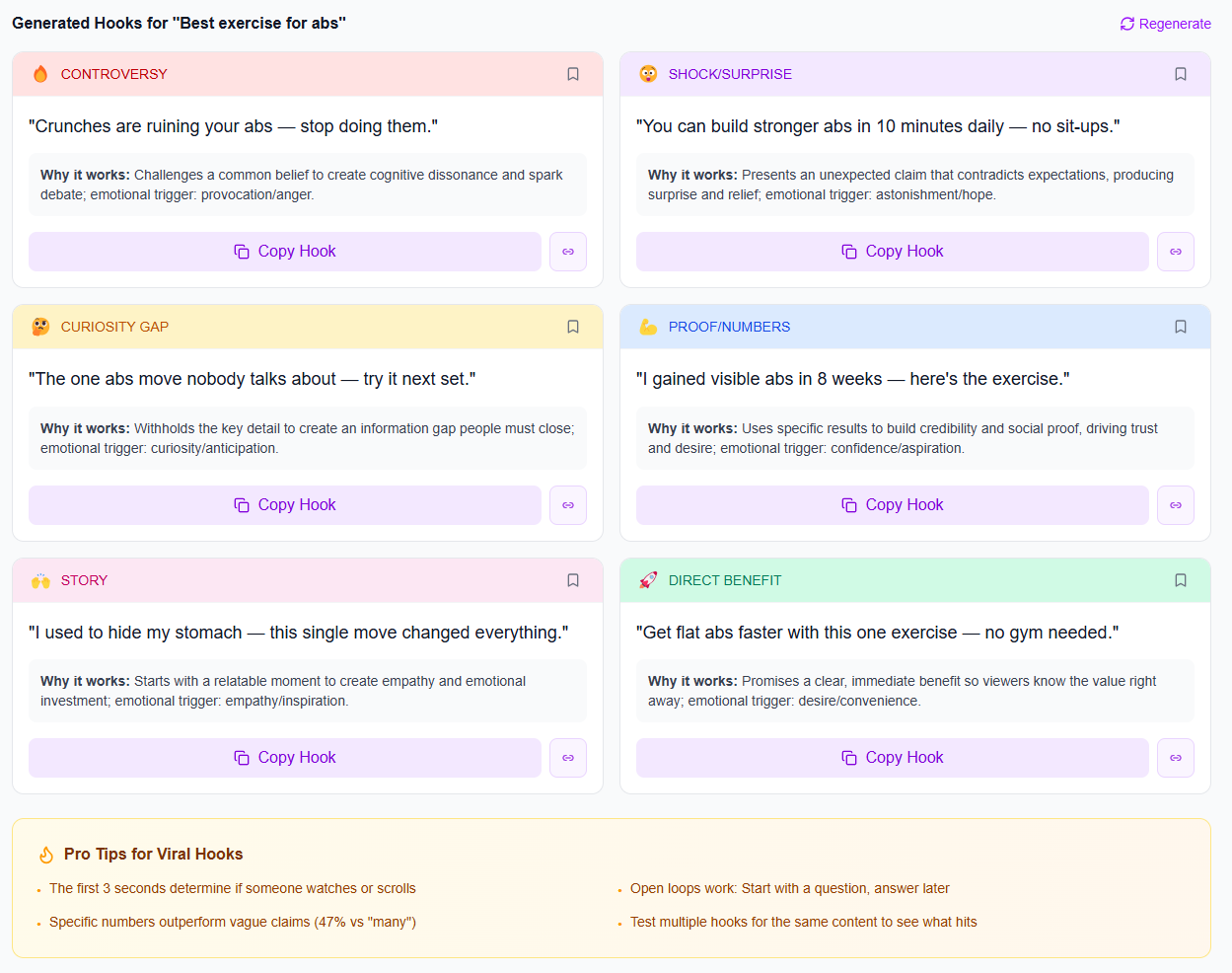
A hook is a promise plus surprise: tell viewers what they’ll get and show a reason to believe it in the first frames. Use these repeatable templates across niches: (1) Result-first: show the outcome in frame one and then explain “How I did it in 60 seconds.” (2) Problem-promise: state a pain point (“Tired of your phone battery dying in 3 hours?”) and immediately show a bold solution. (3) Shock-data: lead with a counterintuitive stat or claim and follow with quick proof.
Concrete examples: a cooking creator opens with a sizzling pan and the finished plated dish while the overlay reads, “Make restaurant garlic shrimp in 5 minutes.” A fintech creator starts with “I saved $2,400 with this $30 trick,” then flashes a screenshot of the savings ladder. For 30–60 second clips, keep the verbal hook to 3–6 words and the visual hook to a single striking frame — faces, movement, or a finished product work best.
Film and edit for impact in the 0–5s range. Use a close-up face shot or a high-contrast macro of your product to register instantly on a tiny screen. Cut faster in the opening: for Reels and TikTok, use 0.5–1 second shots for the first 3 seconds to create energy, then slow the pace after you’ve captured attention. Avoid long logo builds or 3–5 second title cards — viewers won’t wait.
Sound matters equally. Start with a recognizable beat drop, a human voice saying the hook line, or an attention-grabbing SFX that matches the footage. Ensure captions and on-screen text mirror the spoken hook so muters still understand the promise. Practical step: build a 3-second “open vault” clip — a short combination of a headline overlay, a close face shot, and a short sound cue — and reuse it as a test across 5 videos to measure lift.
What separates creators who get lucky from those who scale is disciplined testing. Run A/B tests across thumbnails and first 5 seconds — change only one variable per test (headline, opening frame, or sound). For example: test the same video with two different 0–5s opens (one shows the finished product, the other teases the process). Run each variation to a minimum of 1,000 impressions before making decisions.
Key metrics to track: 5-second retention rate, click-through rate (for thumbnails), watch time per view, and engagement (likes/comments/shares within first hour). If a variant increases 5s retention by even 8–10%, roll it out. Use short experiment cycles (1–2 weeks per test) and document results in a simple spreadsheet: variant, impressions, 5s retention, watch time, and outcome. Over 12 weeks you’ll collect statistically meaningful insights and patterns you can reuse.
"Win the first 5 seconds and the algorithm will do the rest — treat that window like a job interview for attention."
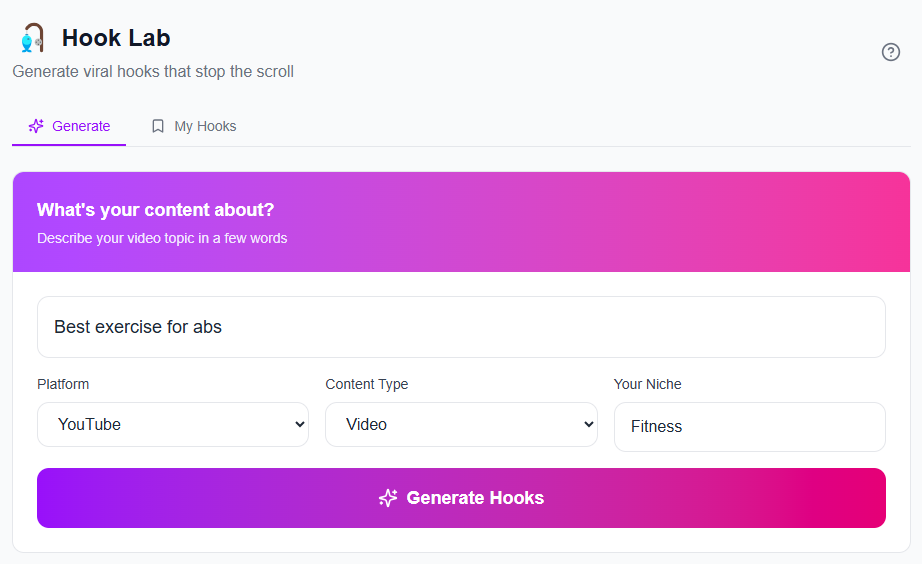
iBuildInfluence provides tools designed to help creators win the opening moment and scale what works. Use Hook Lab to generate and score 50 headline hooks per topic — pick the top-scoring hooks for your 0–5 second overlays or voice lines, then refine them based on engagement. Pair that with the Content Generator to turn a single hook into a full content package (script, captions, and variants) so you can quickly produce multiple test versions.
For trend-aligned openings, Trend Scout helps you discover rising sounds and visuals before they peak, while Social Statistics lets you monitor 5-second retention, saves, and share rates across platforms so you can see which openings actually move the needle. Finally, use the Content Planner & Content Queue to schedule variants and maintain a cadence of tests without manual posting. If you want practical tutorials on hooks and trends, check out our posts on maximizing clicks with Hook Lab and finding current trends with Trend Scout.
Platforms measure early retention to decide whether a video should be promoted. A strong 0–5 second performance signals relevance and quality, increasing the chance the algorithm pushes your content to more feeds. It’s also the point where viewers decide to commit attention or move on, so small gains yield outsized distribution benefits.
An effective hook combines a clear promise, immediate visual proof, and a surprise or emotional trigger. Keep verbal hooks short (3–6 words), match them with striking visuals (faces, motion, product close-ups), and use sound or captions so the message reads even with sound off.
Run controlled A/B tests where you change only one variable per test and gather at least 1,000 impressions per variant before deciding. Use platform analytics or tools like Social Statistics to compare 5-second retention, watch time, and engagement. Iterate weekly and scale the winning variant into future videos.
First impressions are literal: the first 5 seconds determine distribution and retention across platforms.
Hooks are repeatable: use result-first, problem-promise, or shock-data templates to create consistent openers.
Technical setup matters: choose close-up shots, fast cuts, and immediate sound cues to increase early retention.
Test with discipline: A/B one variable at a time, target 1,000 impressions per variant, and measure 5s retention and watch time.
Use tools to scale: tools like Hook Lab, Content Generator, and Social Statistics make it faster to ideate, produce, and measure winning openings.
Found this helpful? Share it:
iBuildInfluence Team
Creator growth strategist at iBuildInfluence. Helping content creators land brand deals, grow their audience, and build sustainable creator businesses.
Try iBuildInfluenceJump in and use Hook Lab to write the opening line before you film.
Open Hook Lab