
Income & Monetization
Creator Niche Sweet Spot: Find an Audience That Buys
July 7, 2026
Learn how to package services, price retainers, and move from one-off brand deals to steady monthly income as a creator.

One-off brand deals feel good—until the calendar is empty again. If you want how to transition from side hustle to full time, you need predictable revenue that compounds. Packaging your offer and introducing retainers is one of the fastest ways to turn “maybe next month” into a real pipeline.
Most creators lose momentum because they sell time as an open-ended request: “Can you make three Reels for us next month?” Instead, packaging means you sell an outcome with clear scope, deliverables, and timelines—so the brand knows exactly what they’re buying and you can price it confidently.
Start by creating 2–3 tiers of a single offer. For example, a creator who does short-form video might package “Product Launch Short-Form System” in three levels:
Starter (1 week): 3 short videos (15–30s) + 10 hook/caption variations + posting support.
Growth (2 weeks): 6 short videos + 2 concept directions + 20 hook/caption variations + 1 round of revision.
Scale (3–4 weeks): 9 short videos + 3 concept directions + storyboard + 2 revision rounds + performance recap and recommendations.
This approach aligns with how brands buy. They want to reduce risk and make internal approvals easier. According to industry reporting, marketers increasingly prefer predictable vendor relationships over one-off projects because it improves planning and results tracking. Your job is to make the “retainer version” of your work feel equally understandable—just repeated monthly.
Practical step: write a one-page “Offer Sheet” for each tier. Include: who it’s for, what’s included, what’s not included, turnaround times, revision policy, and what success looks like (views, CTR, conversions, saves, or inbound traffic). If you already have a content creator business plan, this becomes the offers section.
A retainer fails when it’s vague (“We’ll post regularly”) or unrealistic (“We’ll guarantee sales”). Your retainer needs a clear rhythm, measurable deliverables, and a feedback loop that makes the brand feel smarter every month.
Think of retainers like a monthly operating system for content. A common model: Strategy + Content + Optimization. Here’s an example retainer for a beauty brand:
Monthly Retainer (4 weeks):
Week 1: monthly content plan (5–7 concepts) + hook angles + UGC scripts (or creator brief)
Week 2–3: production of 6 short videos (or 12 if batching heavily) + captions + brand review
Week 4: optimization recap (top themes, what to repeat, what to stop) + 2 community engagement prompts (comment replies or follow-up stories)
What makes this “sticky” is the optimization component. Brands don’t keep vendors just because content gets posted—they keep partners who learn with them. Even if your deliverable is mostly creative, you can still include performance learnings and next-month adjustments.
Realistic expectation setting matters. Instead of guaranteeing outcomes, use guardrails: “We’ll optimize based on platform signals like saves, shares, watch time, and click-through to your link.” On many platforms, engagement leading indicators are often more reliable than conversion claims in early months.
Practical step: pick one “north star metric” per deliverable type. If you’re doing YouTube (or long-form), focus on watch time and returning viewers. If you’re doing Reels/TikTok, focus on average view duration, saves, and shares. If you’re driving traffic, focus on link clicks and CTR. This will make your monthly reports credible and easy for brands to review.
When creators move from one-offs to monthly retainers, the pricing often gets stuck. Either they undercharge to “secure stability” or overcharge due to fear of scope creep. A better method: price based on workload, complexity, and brand risk—then align it to the packaged deliverables you already defined.
Start with your baseline “per deliverable” rate. Example: if you charge $400 per short video (including planning + edits), a 6-video retainer has a base creative cost of $2,400. Now account for retainer realities:
1) Batching savings: If you can batch filming and edit across multiple videos in one workflow, your effective hourly cost improves. You can reflect that with a modest discount (e.g., 5–15%) compared to buying 6 one-off videos.
2) Additional management: Monthly retainers typically require briefs, revisions, reporting, and scheduling coordination. Add a fixed “account management” fee (even if small) so you’re not mentally freelancing extra labor for free.
3) Revision policy: Retainers with clear revision limits feel fair. For instance, “1 round of revisions on final edits” prevents endless back-and-forth.
4) Brand approval timeline risk: If brands delay feedback, your output gets affected. Include turnaround expectations: “Brand feedback within 3 business days; otherwise production schedule shifts.” This protects your ability to deliver consistently.
As a practical rule, many creators find a retainer should be between 15–35% higher than the average one-off monthly equivalent when it includes strategy + optimization + reporting (not just production). That premium covers your added value and the continuity they’re buying.
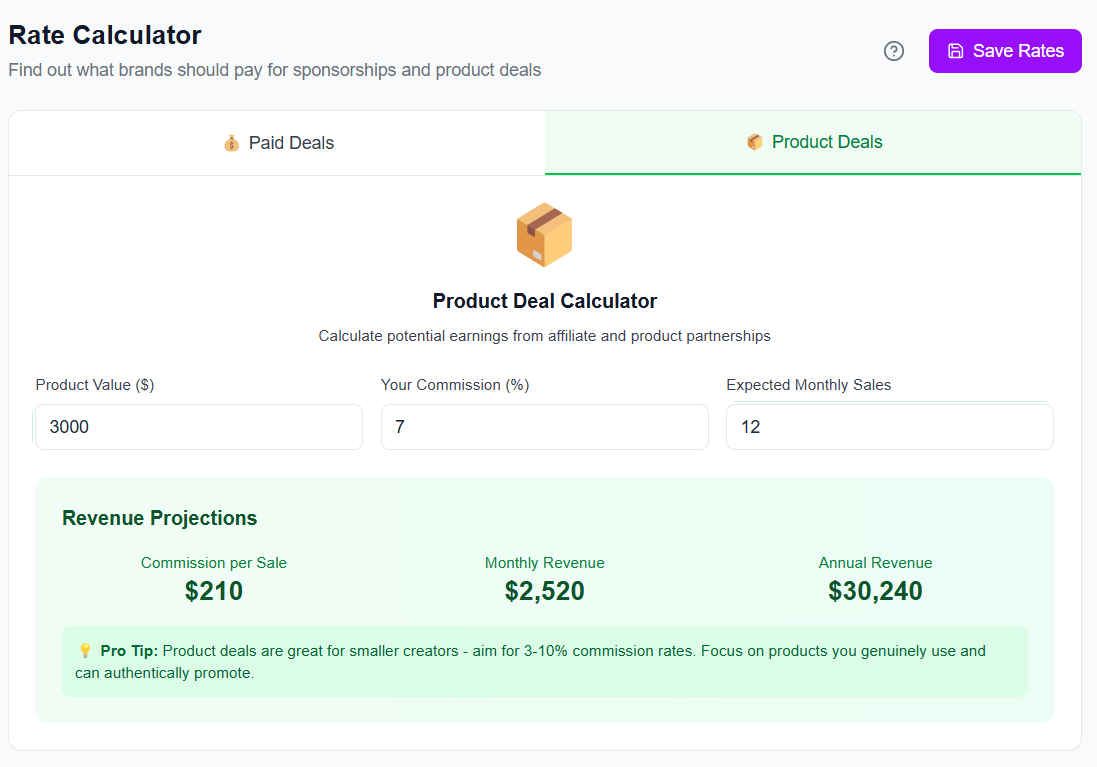
If you’re unsure where you should land, use a rate calculator approach based on real benchmarks and your niche. Build your “retainer math” so you can confidently say yes or adjust without emotional pricing.
Internal clarity also matters: define what a “month” includes (30 days vs calendar month) and how deliverables are scheduled. This becomes essential when you’re building a content creator workflow that doesn’t collapse under revisions.
Many creators pitch retainers as “discounted work.” Brands don’t just want cheaper—they want lower risk and better planning. Your pitch should position the retainer as a system that reduces uncertainty and produces continuous learning.
Use this retainer pitch structure:
1) The problem (1–2 sentences): “Your team wants consistent content, but one-off requests make approvals and iteration harder.”
2) The solution (bullet deliverables): strategy, production cadence, optimization recap, revision policy.
3) Why now: mention timing like launch windows, seasonal demand, or the brand’s need for ongoing creative.
4) Proof: include 1–3 relevant performance examples (saves/shares, CTR, watch time, or conversions from a trackable link). If you don’t have brand-specific results, use platform signals like engagement rate and retention curves.
5) Process: show exactly how you’ll work each month: intake → concepting → production → review → publish → recap.
For credibility, make sure your pitch includes a simple proposal with deliverables and timeline. If you want a repeatable workflow, create a retainer proposal template you can reuse with brand-specific adjustments.
Quick example: “For the next 60 days, I’ll run a monthly content system producing 6–9 short videos with a weekly iteration loop. You’ll receive a short performance recap at month end with what to repeat next month. You get continuity and less approval chaos because we plan concepts up front.”
Internal link suggestion: if you want to sharpen the hook and open stronger, review How to Write the Perfect Pitch to Brands (iBuildInfluence Pitch Machine) for a plug-and-play approach.
Retainers succeed when delivery is predictable. That doesn’t mean you post mindlessly—it means you run the same workflow every month so you can handle approvals, iteration, and platform changes without chaos. This is where a content creator workflow becomes a business advantage.
Build your monthly OS around three phases:
Phase 1: Plan (Week 1) — confirm objectives, review the brand’s priorities, finalize concepts, and generate scripts/captions. This is where you reduce costly last-minute changes.
Phase 2: Batch (Weeks 2–3) — film and edit in one concentrated cycle. Batching reduces cost and helps maintain visual consistency.
Phase 3: Optimize (Week 4) — analyze results (saves, shares, engagement rate, watch time, click-through), then propose next-month adjustments. Even a short recap builds trust and sets up month-over-month renewal.
To “how to get more views” with retainers, you need feedback loops. If you’re seeing that certain hook patterns drive higher retention, you repeat them with new angles. If a format underperforms, you swap it early. Brands value partners who can translate platform data into creative decisions.
Internal link suggestion: a strong content calendar reduces delivery stress. Use Complete Guide to Building a Content Calendar for Consistent Views to structure your month around output and iteration.
Practical step: schedule deliverables by checkpoint dates, not only posting dates. For example: draft scripts by Tuesday, first edit by Thursday, final approval by next Monday. This makes your retainer feel professional and reduces last-minute brand edits.
“A retainer isn’t recurring content—it’s recurring value, delivered on a schedule with clear learning built in.”
If you’re moving from one-off projects to monthly income, you need a system that supports both packaging and delivery. iBuildInfluence helps you generate complete offer-ready content packages with Content Generator (turn one idea into scripts, captions, and variations) and validate what to create using Hook Lab (viral hook generator with AI scoring so you’re not guessing at the opening line).
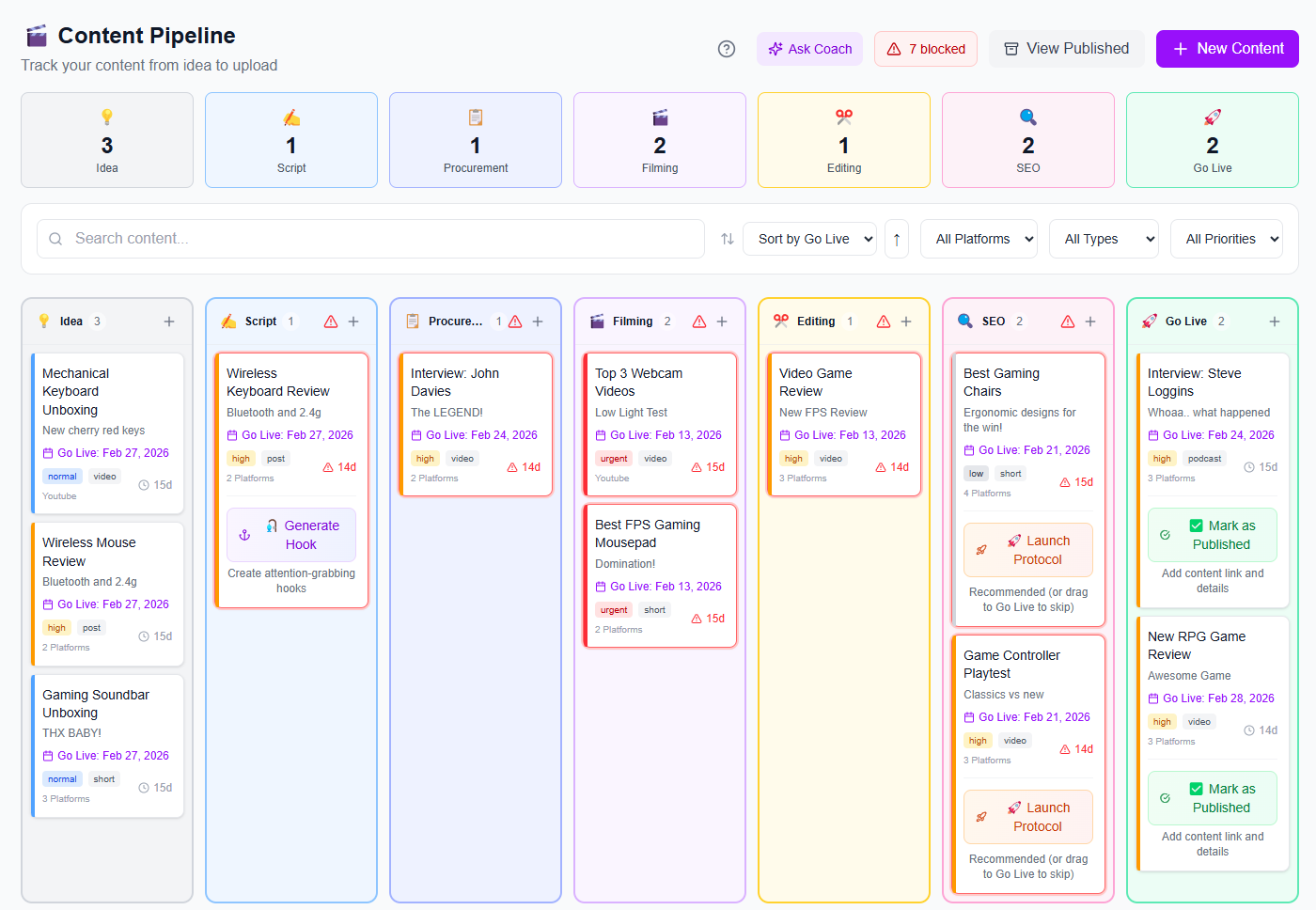
For retainers, consistency and sales follow-through matter. Use Content Planner & Content Queue to plan weeks of content and auto-schedule so you can batch production and meet monthly deadlines. On the income side, Pitch Machine speeds up retainer proposals, while Revenue Pipeline / Deal Pipeline tracks deals from first pitch to payment—so your “monthly income” plan stays organized and measurable.
Include a repeatable set of items like concepting, production, posting support, and a monthly performance recap. Keep scope clear (number of videos/posts, revision rounds, and turnaround times) so the brand knows what to expect each month. If you offer strategy, include it explicitly—otherwise it will quietly expand beyond what you can deliver.
Start with your average one-off cost per deliverable, then convert it into a monthly package using batching and retainer-specific value (strategy, optimization, reporting, and management). Add a fixed account-management fee and set boundaries for revisions and brand feedback timelines to protect your workload. If you want precision, use a rate calculation approach based on your niche and real benchmarks.
Use platform proof instead: engagement rate, watch time, saves/shares, and example content that matches the brand’s category. In your pitch, emphasize process—how you’ll plan concepts, test hooks, and optimize monthly—rather than promising specific sales results on day one. You can also offer a short onboarding window (e.g., a 30–60 day pilot retainer) with clear deliverables and reporting.
Package your offer as tiers with clear scope and outcomes—so brands understand what a monthly commitment includes.
Design retainers as a monthly system: strategy, content, and optimization/reporting that improves over time.
Price retainers using deliverables, complexity, batching, revision limits, and brand approval risk.
Pitch retainers as a partnership with process, not discounted one-off work.
Deliver consistently with a repeatable content operating system and performance feedback loops.
Found this helpful? Share it:
iBuildInfluence Team
Creator growth strategist at iBuildInfluence. Helping content creators land brand deals, grow their audience, and build sustainable creator businesses.
More from iBuildInfluenceJoin thousands of creators using iBuildInfluence to land brand deals, grow their audience, and build real income.
Start Free ΓÇö No Credit Card Required