Content Strategy
Why Posting More Isn’t the Answer: Grow Smarter in 2026
July 9, 2026
Stop guessing how to go viral. Learn the repeatable system for hooks, retention, and distribution that top creators use in 2026. Get practical steps to make your next upload explode.

Viral content in 2026 is changing fast—but the winners aren’t “getting lucky.” They’re building repeatable systems around hooks, retention, distribution, and measurement. This guide shows you what works right now, with practical steps you can use in your next upload.
In 2026, platforms are increasingly ruthless about early engagement. If people don’t stop within the first moment, your content won’t get the distribution it needs. That means your first line, visual, and promise must work together. A common mistake: creators save the “real point” for later—then wonder why the video stalls.
Use a 3-part hook formula that sets stakes immediately: (1) a specific claim, (2) who it’s for, and (3) what changes if they keep watching. For example: “Stop losing viewers in your first 5 seconds—here’s the exact pattern top creators use.” Notice it’s not “tips for creators.” It’s precise, targeted, and implies a transformation.
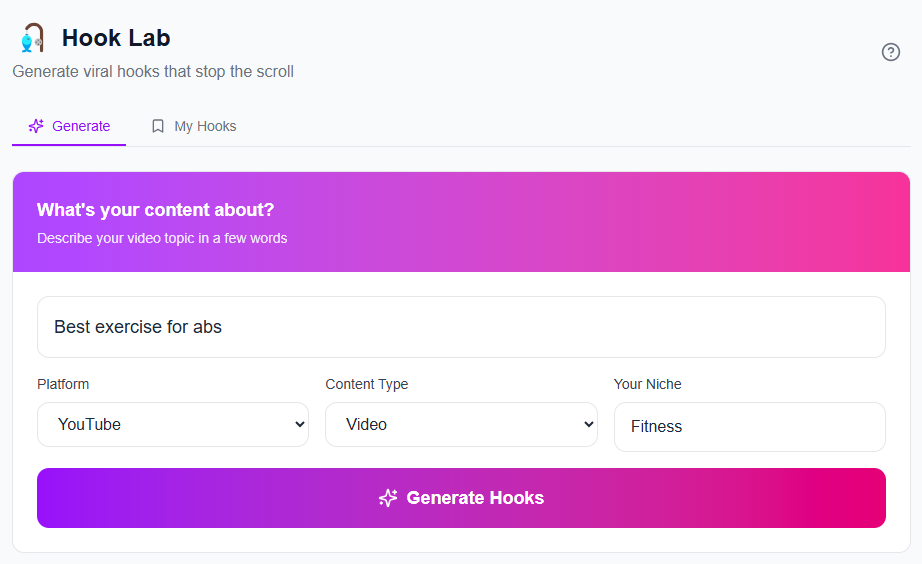
Real-world example: Many top-performing creators test variations like “Do this, not that” versus “Here’s why yours fails.” The best performers tend to be contrast hooks (mistake → fix) because they quickly answer “Should I care?” If you want a fast upgrade, generate 10 hook variations for the same video concept, then use the first one that gets the strongest early click-through.
If you’re unsure which hook is strongest, build a mini-hook test plan. Create 3 versions of the opener with different wording and visual emphasis, then post back-to-back (or within 24–48 hours) to reduce confounding factors like audience availability. You’re not just chasing virality—you’re training your pattern recognition for how to get more views.
Viral content doesn’t only get clicks—it sustains attention. In 2026, algorithms weigh signals like watch time, replays, completion rate, and downstream engagement (shares, saves, comments that indicate relevance). You can’t rely on editing style alone; you need structured payoff.
Think in “story beats.” A beat is a unit of interest: a claim, demonstration, proof point, or decision. For short-form videos, plan one beat every ~2–4 seconds. For example, if your topic is “how to start affiliate marketing,” your beats might be: (1) the outcome, (2) a common myth, (3) the 3-step setup, (4) proof screenshot, (5) the first action to take today, (6) a call to save/subscribe.
For YouTube, the “YouTube algorithm 2026” mindset is simple: the algorithm can’t guess whether your video will satisfy viewers—it infers satisfaction from performance. That’s why strong intros should preview the journey and maintain momentum. A practical test: record your “intro” twice—one version that starts with the problem and one that starts with the result—then keep whichever version produces a higher early average view duration.
Also, build retention using micro-patterns: quick zooms on key words, on-screen text that mirrors narration, and visual proof (screens, charts, B-roll with meaning). And avoid “setup spirals.” If your intro takes more than ~15–25% of the total runtime before delivering value, retention usually suffers.
“Viral” is often a byproduct of format. In 2026, the most reliable viral formats are those that (a) reduce viewer effort and (b) create a reason to return. Series content is powerful because it trains the audience to expect the next episode.
Try building a repeatable series around a single promise. Example: “30 Days of Creator Systems.” Each episode uses the same structure: Hook → One specific tactic → Live example → Mistake to avoid → Next episode tease. Over time, viewers learn your style, and the platform learns what your audience responds to.
Another format that performs well is “proof-first remix.” Instead of “I tried X,” lead with the outcome or evidence: “I tested 3 posting times—here’s which one doubled saves.” Then show the process briefly. This reduces skepticism and increases shares because the content feels actionable, not performative.
For Instagram and social feeds, carousels still win when the slide content is dense and genuinely useful. Make your first slide a blank-to-clarity statement (“Your hook should sound like this…”). Then slide 2–4 provide frameworks, and the final slide provides a template. If you want a practical workflow, write the entire carousel in outline form first, then design the slides as if they’re “one idea per slide.”
Finally, incorporate a low-friction call to action that matches the content type. If it’s a checklist, ask people to save. If it’s a debate, ask a comment with their answer. If it’s a tutorial, ask for a follow to get the next installment. Viral content in 2026 is often “shareable utility,” not just entertainment.
Distribution is where many creators lose momentum. Posting “when it feels right” often doesn’t correlate with your audience’s actual online behavior. In 2026, distribution is a system: topic selection, format choice, posting schedule, and iterative measurement.
Start with topic scouting: don’t chase only what’s trending globally—chase what’s trending for your niche. Many creators wait until the topic is saturated. Instead, identify emerging angles early, then attach your unique value. For example, if your niche is fitness, don’t just do “keto.” Do “keto for busy schedules” or “keto grocery list that takes 15 minutes.” Specificity helps both retention and relevance.
Next: run timing tests. Pick two posting windows that match your audience’s habits (for many creators, that’s often evenings and lunch breaks, but it varies). Post the same format concept with two different schedules over 2–3 weeks and compare performance based on metrics that reflect quality—like engagement rate, saves, and average watch time—rather than only raw views.
For YouTube, treat thumbnails and titles as distribution assets, not afterthoughts. Use patterns: contrast, clear benefit, readable text, and curiosity without deception. In practice, test two thumbnail designs for the same video idea: one text-forward and one visual-forward. Then watch which version improves CTR (click-through rate) and whether higher CTR also improves watch time.
This is where analytics matters. Use cross-platform analytics to track what’s actually working. The goal is to find which combination of hook + format + topic drives repeatable results. Once you identify the pattern, scale it with a content creator business plan that supports weekly iteration—not one-off “hype uploads.” If you need a structured way to plan across weeks, build a content calendar that includes variations and tests. The more deliberate your tests, the faster you learn how to get more views without burning out.
The biggest reason viral posts don’t repeat is that creators can’t sustain the process behind them. In 2026, virality rewards systems: idea capture, scripting, batching, editing templates, distribution checklists, and performance review.
Create a simple weekly loop. Day 1: choose 3 topics based on what’s performing and what your audience is asking. Day 2: draft 2–3 hooks per topic and select the best. Day 3: produce in batches—shoot or record similar formats together. Day 4: edit with reusable templates (lower thirds, captions style, transitions). Day 5: distribute and engage. Day 6–7: review analytics, identify winners, and plan the next iteration.
This loop helps especially when you’re learning how to transition from side hustle to full time. Full-time requires predictability. You can’t wait for inspiration; you need a pipeline. Viral content is not just an event—it’s a product of consistent effort.
Also, connect your viral content to monetization thoughtfully. If you’re aiming for passive income for content creators or selling a digital product, your viral posts should lead to a clear next step: a lead magnet, an email series, or a low-friction offer that matches viewer intent. For example, if your viral video teaches a checklist, offer a downloadable version in exchange for an email.
Use the same approach for brand deals too. Viral attention becomes leverage when you can show performance. Maintain a lightweight reporting habit: note which video drove saves, which drove brand inquiries, and which generated comments requesting templates. Then use that evidence in future pitches and proposals.
In 2026, “viral” is less about one perfect post—and more about the system that keeps producing posts your audience instantly understands.
If you want viral content in 2026, you need speed and feedback. iBuildInfluence helps you turn ideas into publish-ready assets while keeping your workflow measurable. For hooks and attention, the Hook Lab generates multiple hook options per topic and scores them so you can quickly identify which patterns are most likely to earn the next second. That’s a practical way to stop guessing and start testing.
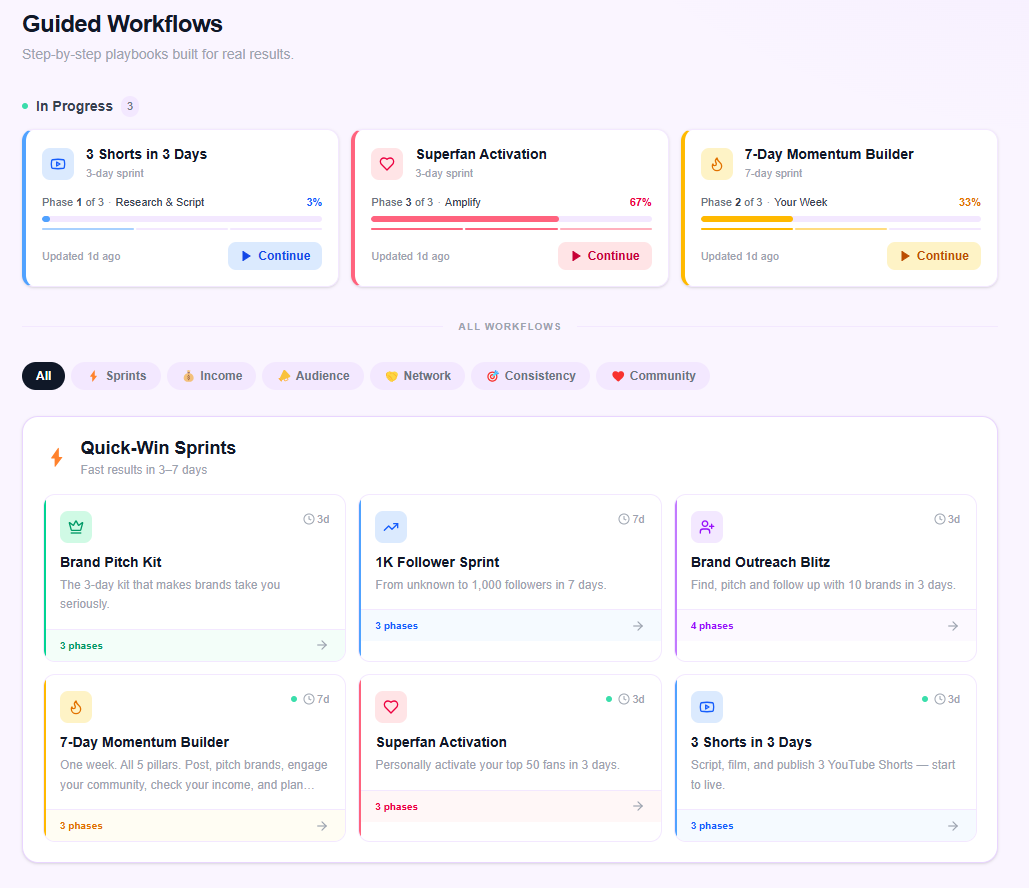
For consistency and iteration, use Trend Scout to discover topics before they peak, then plan and schedule with Content Planner & Content Queue so you’re not scrambling each week. Finally, Social Statistics gives you cross-platform performance insights (like engagement rate and saves/shares patterns), helping you learn what’s actually driving results—useful when you’re refining your content creator workflow or optimizing for the YouTube algorithm 2026.
The most effective viral content in 2026 is usually proof-driven, easy-to-follow utility (checklists, frameworks, and results) delivered in a repeatable format like a series. The key is that the content must be understandable instantly and pay off quickly for retention. Build formats you can reuse and iterate, not one-time experiments.
Increase views by running controlled tests: vary your hook, keep the core idea consistent, and measure outcomes like CTR (where applicable), watch time, saves, and shares. Then double down on the strongest hook/format/topic combination. A planned content calendar and tracking metrics can improve results faster than increasing volume.
YouTube rewards satisfaction signals, so both short and long videos can go viral as long as viewers stay engaged. For long videos, maintain momentum with clear chapter structure, frequent “payoffs,” and strong intros that match the promised outcome. Keep an eye on retention and adjust your structure if viewers drop early.
Viral content in 2026 is driven by early hook performance and retention-focused story beats.
Use repeatable formats—series, proof-first remixes, and carousel templates—so your content compounds.
Distribution isn’t guessing: test timing, titles/thumbnails (YouTube), and topic angles using the right metrics.
Build a weekly content creator workflow that supports consistent output and fast learning.
Use analytics to scale what works—then connect viral reach to monetization through lead magnets, digital products, or brand outreach.
Found this helpful? Share it:
iBuildInfluence Team
Creator growth strategist at iBuildInfluence. Helping content creators land brand deals, grow their audience, and build sustainable creator businesses.
More from iBuildInfluenceJoin thousands of creators using iBuildInfluence to land brand deals, grow their audience, and build real income.
Start Free ΓÇö No Credit Card Required