Income & Monetization
From Views to Income: Optimize Your YouTube Monetization Strategy
August 26, 2026
I tracked 90 days of brand deals as a micro-creator. Here’s what ghosting cost me—and the 7-day workflow that stabilized cash flow.
For 90 days, I tracked every brand deal like a spreadsheet: outreach date, pitch version, sent assets, approved revision count, payment date—and yes, every ghost. I thought I was “busy being a creator.” Turns out, I was also busy bleeding cash flow.
In this post, I’ll share the exact revenue patterns I saw, how ghosting showed up before it happened, and the 7-day workflow that turned unpredictable brand income into something closer to a system.
Before I tracked, my brain ran on vibes: “They seemed interested,” “They liked my last post,” “They’ll probably pay soon.” After 90 days, the data showed clear stages where money either moved—or stalled.
My deal funnel looked like this: 43 brand outreach attempts → 14 replies → 9 paid discussions → 5 executed deals. That’s a conversion rate of about 11.6% from first outreach to paid execution (5/43). Not bad for micro-creator status, but what mattered more was the timeline and the failure points.
Ghosting wasn’t random. It clustered around specific moments: after a “quick yes,” after I sent media kit links, and after I delivered first draft content. In other words, ghosting often happened after effort was spent, not before.
Here are the most common “stall signals” I logged:
1) “We’re circling back” with no date. This usually meant the deal wasn’t a priority.
2) Revision requests without a timeline. If a brand asks for edits but can’t say when approval will happen, you’ve entered a limbo state.
3) Payment language that doesn’t match contract language. “We’ll handle payment after posting” is a risk if your contract says net terms (ex: net 15).
4) Channel mismatch. If they want results on Instagram but you pitch a YouTube-style deliverable, you’ll get slower approvals—or silent rejection.
Once I saw these patterns, the problem shifted: it wasn’t “How do I get more brands?” It was how do I protect cash flow when brands move slowly.
If you’re trying to build a content creator business plan, this is the part most creators skip. They plan content; they don’t plan payments.
Ghosting doesn’t just mean “they didn’t respond.” For a micro-creator, it usually means your time and opportunity cost stack up in the worst way: you keep working, but the payment cycle never starts.
In my 90-day window, three deals didn’t pay on schedule. Two were fully “paid eventually,” one disappeared after approvals. The disappeared deal wasn’t the largest contract—but it was the most damaging because I had already produced deliverables and spent time on revisions. That time didn’t magically become billable work elsewhere.
Here’s the cash flow math that finally clicked for me: If you’re expecting a payment by day 21 and it moves to day 60, your next content production cycle is forced to happen without that revenue. That’s not just inconvenient; it changes how you create because you’ll start chasing the “next deal” instead of batching deliverables efficiently.
In practical terms, ghosting caused:
• Missed buffer days. I stopped maintaining a minimum two-week operating buffer for editors, tools, props, and basic content costs.
• Higher stress output. Stress lowers consistency, and inconsistency lowers your pipeline credibility.
• Slower pipeline confidence. When you don’t know if you’ll get paid, you hesitate to accept good deals too—because you’re already behind on bad ones.
To fix that, I stopped treating brand work like a one-off transaction. I started treating it like a mini project with a deadline heartbeat.
If you want a broader growth lens for consistency, this pairs well with How Consistency Wins the Content Creator Game (Playbook), because consistent publishing and consistent payment cycles are both systems—just different variables.
I didn’t need “motivation.” I needed a repeatable workflow that forced deals forward without being awkward. The key was timing: each step had a purpose, and each message had a clear “next action.”
Here’s the 7-day workflow I ran for every brand after agreement. (Use it whether you’re managing YouTube sponsorships, Instagram integrations, or sell digital products creator offers.)
Day 1: Contract + payment terms confirmation (no exceptions).
I send a final message that includes: deliverable list, usage rights, due dates, and payment terms (example: “Net 15 after content approval”). I confirm the invoice details and the exact payment method (ACH/Wire/PayPal business).
Day 2: Creative production plan + approval checkpoint.
I send a mini timeline: “Draft by Day 4, revision window Day 5, final approval by Day 6.” This does two things: it sets expectations and it creates a record that approval is time-bound.
Day 3: Asset delivery to start the approval clock.
I deliver something tangible early (script outline, thumbnail concept, first cut, or storyboards). If they want “just one more thing,” you’re still in a structured revision window.
Day 4: Follow-up #1 (short, factual, and deadline-based).
Message style: “Quick check-in—draft sent Day 3. Are we on track for approval by Day 6? If you need changes, reply with specifics and the target outcome.”
Day 5: Follow-up #2 + revision log.
I send a one-paragraph revision summary with bullet points so we don’t spiral. Example: “Edits requested: (1) tighten hook in first 2 seconds, (2) add CTA at 0:43, (3) update caption to include discount code.”
Day 6: “Approval to invoice” handoff.
Once they approve, I immediately invoice (or start invoice workflow). This is where ghosting prevention matters: if payment only happens “after posting,” ask for posting date confirmation and a payment trigger date.
Day 7: Payment follow-up (invoice status + receipt of approval).
I ask for invoice status—not content approval. Example: “Invoice sent on Day 6 for approved deliverable. Can you confirm payment status and expected transfer date?”
Notice what I didn’t do: I didn’t ask “Can you pay?” I asked for status. It’s less emotional, more professional, and harder to ignore.
After adopting this workflow, my average time-to-payment dropped. In my tracked deals, on-time payments moved from sporadic to consistent: agreements that followed the workflow were far more likely to land within the agreed net terms.
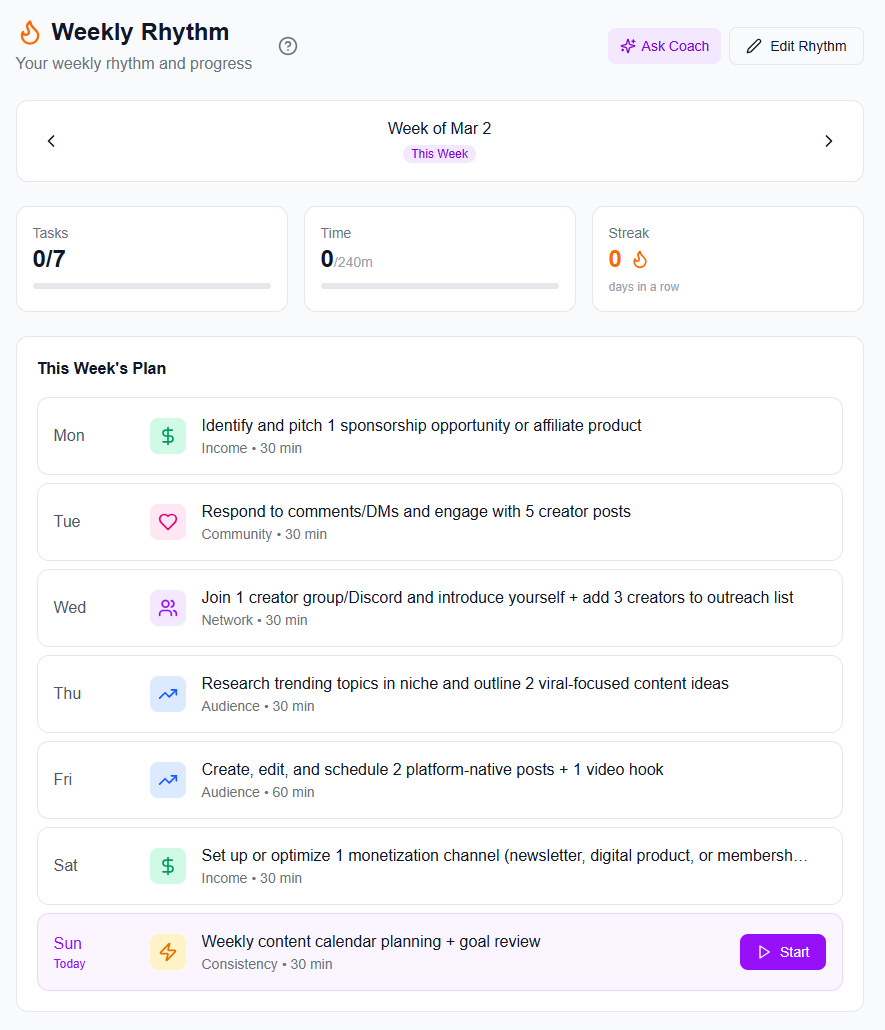
If you’re figuring out how to transition from side hustle to full time, this is one of those unsexy but critical moves. You can’t scale content creation if your revenue arrives late and random.
Ghosting often comes from uncertainty. Brands don’t always ghost because they’re evil; they ghost because they feel like you’ll keep working even if the timeline is unclear. Your job is to remove uncertainty and make next steps unavoidable.
Use “proof-of-process” in your messaging. Every message should show that you run a system. When I send drafts, I attach a revision log template and confirm the decision points. When I ask for approvals, I include a specific date. Brands respond better to structure because it reduces internal coordination effort on their side.
Attach timelines to every asset request. If you only say “Here’s my draft,” you’ll get vague feedback. Instead, say: “Reply by 3 PM your time to keep approval on track for Day 6.” Even if they miss the deadline, you’ve created accountability.
Make your deliverables modular. When you offer one massive package (“full campaign + edits + reporting”), brands get overwhelmed. I started bundling deliverables into chunks: one video, one short-form cutdown, one caption set, and (if needed) a lightweight usage checklist. Micro creators can still negotiate this—especially if you use clear deliverable scoping.
Set escalation rules early. In one deal, I included a clause in my contract/process language: if approval lags beyond the revision window, either (a) the deliverable is considered approved for payment, or (b) we pause the schedule and renegotiate timeline. You don’t need to be aggressive—but you need to be clear.
Finally, track “ghosting likelihood” like a risk score. My rule was simple: if a brand didn’t confirm payment terms within the first conversation and didn’t agree to dates for approval, I reduced the scope or asked for partial payment. That one change lowered the risk of disappearing deals.
If you’re also exploring income diversification—like how to create recurring offers—this aligns with the idea in Monetize Your Audience: A Practical Creator Income Playbook, where the focus is building multiple revenue streams that don’t all depend on one brand’s timing.
Cash flow isn’t a finance problem—it’s a project management problem. When you treat deals like timelines (not conversations), ghosting loses its power.
When I moved from “remembering” deals to “running” them, iBuildInfluence became the backbone of my workflow. The Deal Pipeline (Revenue Pipeline / Deal Pipeline) helped me track each brand from pitch to payment, so I wasn’t guessing what stage a deal was in or forgetting follow-ups. Instead of one-off reminders, I could see whether I was waiting on approval, invoice details, or actual payment.
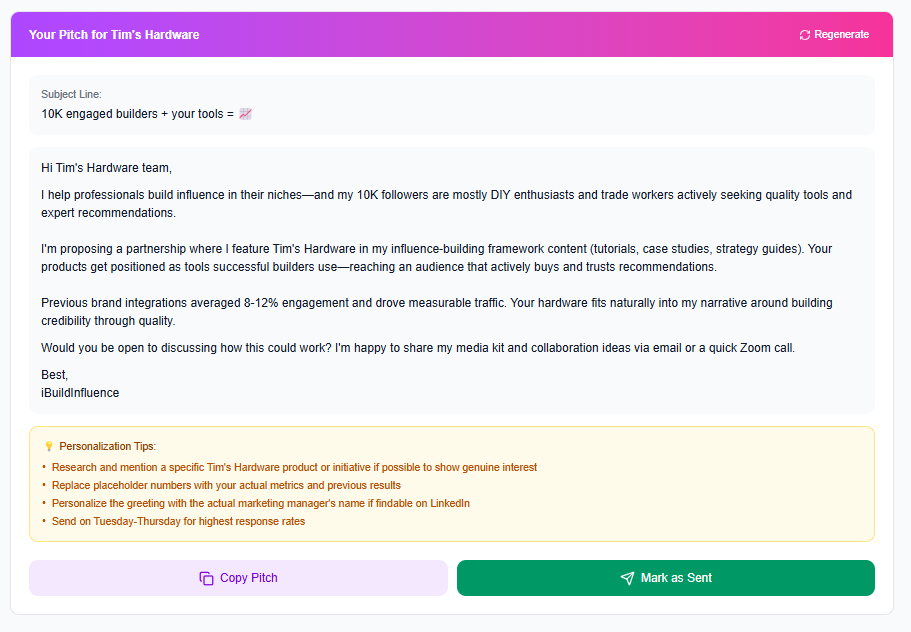
To reduce the back-and-forth that often triggers ghosting, I also used Pitch Machine to write consistent, brand-ready outreach messages quickly, and Contracts & Invoices to keep legal and payment steps moving without hesitation. For creators who want content creator workflow plus a real revenue system, this is the kind of “operational clarity” that makes the 7-day workflow actually stick.
Use timelines and payment terms in every step: confirm net terms early, deliver assets with checkpoint dates, and follow up by requesting invoice status—not just “any update.” If a brand won’t commit to dates, reduce scope or request partial payment to protect cash flow.
Create stages you can’t forget (pitch sent, agreement reached, assets delivered, approval received, invoice sent, payment received). Then schedule consistent follow-ups tied to the stage, not to emotions—so your next message is always aligned with what’s actually blocking payment.
Many deals aim for net terms like net 15 or net 30 after approval, but timelines vary by brand. The key is to negotiate a trigger date (approval date or posting date) and document it in your contract so delays don’t become indefinite.
Ghosting clusters after effort spent—especially after drafts and “quick yes” responses—so timelines matter more than vibes.
Tracking 90 days revealed failure points in approvals and payment triggers, not necessarily in outreach.
My 7-day workflow stabilized cash flow by forcing action: contract → draft → approvals → invoice → payment status follow-ups.
Reduce ghosting risk with proof-of-process, modular deliverables, and revision logs that create accountability.
Use systems (like iBuildInfluence Deal Pipeline + Contracts & Invoices) to turn brand deals into predictable project management.
Found this helpful? Share it:
iBuildInfluence Team
Creator growth strategist at iBuildInfluence. Helping content creators land brand deals, grow their audience, and build sustainable creator businesses.
More from iBuildInfluenceJoin thousands of creators using iBuildInfluence to land brand deals, grow their audience, and build real income.
Start Free ΓÇö No Credit Card Required