Creator Tips
Biggest Mistake Small YouTubers Make (and How to Fix It)
May 20, 2026
Learn a practical 2026 plan to reach your first 100 subscribers using smart content, distribution, and analytics—plus workflow tips that stick.
Getting your first 100 subscribers in 2026 is less about “going viral” and more about building a repeatable system that earns trust. If you can consistently publish content that matches what your audience is already searching for, those first 100 will show up faster than you think.
In this guide, you’ll get a practical, step-by-step playbook with examples, numbers, and a workflow you can run every week—so you’re not guessing or burning out.
To get your first 100 subscribers, you need clarity: Who is this for, and what will they get if they subscribe? Most new creators fail here because they choose broad topics like “fitness” or “gaming” without narrowing to a specific audience problem.
Start by writing a one-sentence promise. Use this template: “I help [specific audience] achieve [specific outcome] using [your method].” Examples for 2026 include:
Bad: “I post about productivity.”
Better: “I help early-stage founders reduce busywork and plan the week in 15 minutes using simple templates.”
Better still: “I help students study smarter (not longer) using 20-minute focus sprints and weekly review checklists.”
Then, confirm the promise with quick signals. Search your topic on YouTube/Google and look for titles that repeatedly get views. Also check comments on competing videos: if people ask “how do I do this?” and “what tool do you use?” you’ve found demand. (That demand is what will convert viewers into subscribers.)
This is also where your content creator business plan begins. You don’t need a fancy document—just a short plan for what you’ll make, who it’s for, and how often.
Subscribers don’t come from one lucky upload. They come from accumulation: enough posts for someone to think, “This creator consistently delivers.” For your first 100, you want a 30-day content pipeline with clear targets.
Here’s a realistic starting target for 2026: 4 posts per week for 4 weeks (16 total). If you can do 2 posts per week, do that—but keep the system. Consistency matters more than perfection.
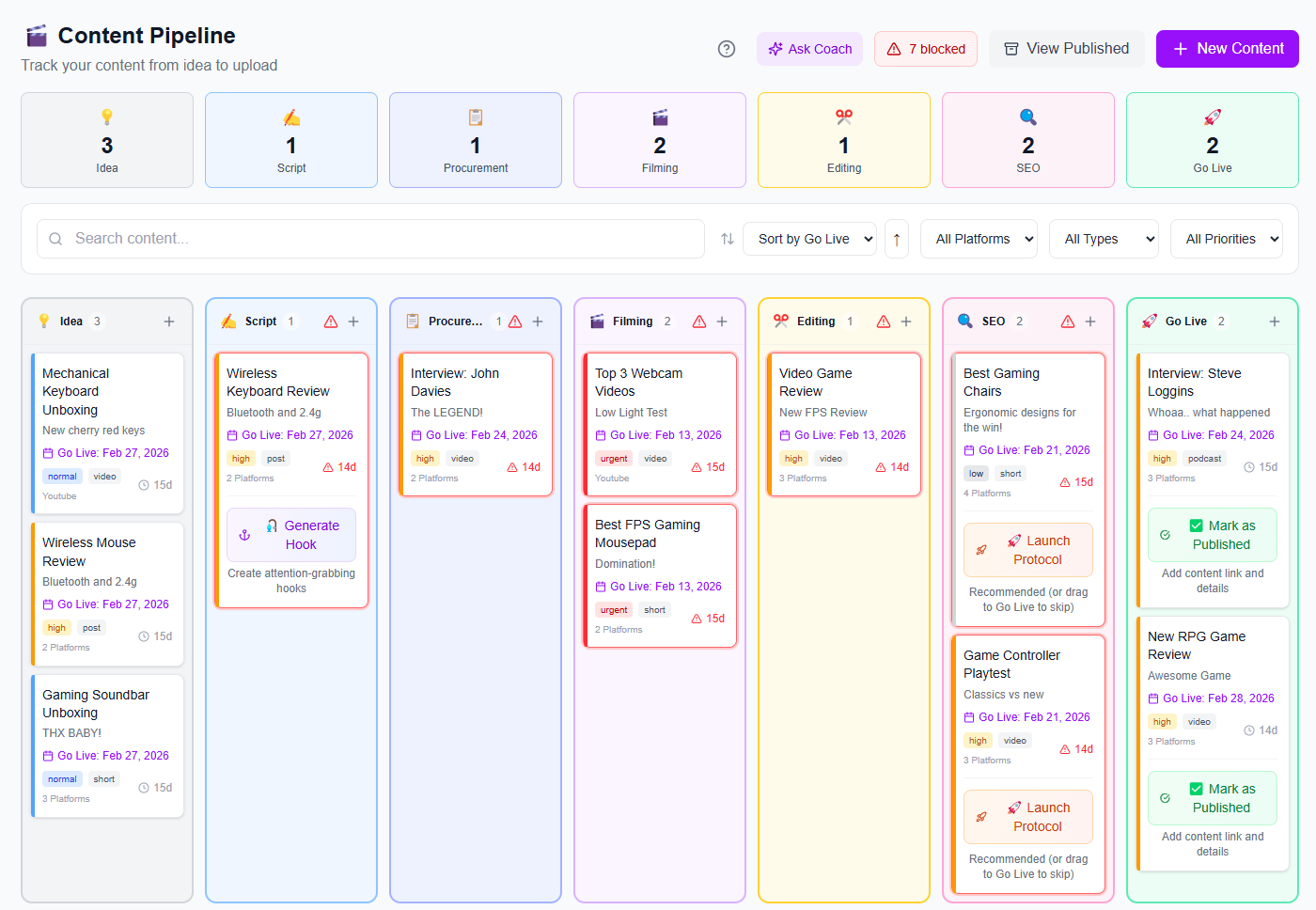
Now, how do you choose what to post? Use a pipeline process:
Step A: Find 10–15 topic angles. For example, if your niche is “budgeting,” angles might be “zero-based budgeting,” “budgeting for irregular income,” “free budgeting templates,” “common budgeting mistakes,” and “how to cut spending without feeling deprived.”
Step B: Turn each angle into 2–3 post “formats.” Example for budgeting:
1) “How-to” (step-by-step)
2) “Mistakes” (what to avoid)
3) “Templates” (downloadable workflow)
Step C: Pre-write hooks and calls-to-action. Every video/post needs a reason to subscribe. A good CTA is specific: “Subscribe for weekly budgeting templates and a 10-minute setup walkthrough every Sunday.”
If you want to go even smarter, use trend discovery so you’re not chasing topics after they peak. You’re aiming for “rising interest,” not “already saturated.”
For extra help with turning one idea into consistent outputs, you can use an AI content creator workflow approach—generate scripts/captions first, then adapt them to your style.
If you want a broader framework for monetization alongside subscriber growth, see Monetize Your Audience: A Practical Creator Income Playbook.
To get your first 100 subscribers, you must do two things: earn initial attention and keep enough people watching/reading long enough to build trust. In 2026, platforms reward engagement quality—not just raw clicks.
Think of a hook as a promise + proof. Your first 1–2 seconds (or first 2–3 lines) should make viewers think: “This is exactly what I need.” Avoid vague hooks like “Today I’ll show you how to grow.” Instead, use measurable or specific framing.
Hook examples that work across niches:
Problem-first: “If your study plan fails by day 3, do this instead.”
Outcome-first: “In 20 minutes, you’ll set up a weekly review that actually sticks.”
Myth-busting: “You don’t need motivation to be consistent—try this system.”
Timeline-first: “This worked in 7 days for my subscribers—here’s the exact routine.”
Then, retention: keep structure tight. Use a repeatable format so your audience learns what to expect. For example:
Template: Hook → Context (why this matters) → Steps (numbered) → Example → Quick recap → CTA.
Realistic expectation for early-stage creators: not every video will perform. But when you post 16 pieces in a month and refine your best-performing hooks, your averages rise quickly. Track which hooks drive more “watch time,” comments, saves, or shares—depending on your platform.
If you’re also learning how visibility works (especially if you’re on YouTube), reviewing YouTube Algorithm 2026: How to Get More Views Consistently can help you align your content to what platforms actually reward.
Your first 100 subscribers depends on repeat exposure. Even if your content is good, most people won’t subscribe after one impression—they need multiple touches. Distribution is how you earn those touches faster.
Use a “publish once, distribute everywhere” workflow. Don’t just cross-post blindly—adapt the format:
YouTube long-form: make a companion short (or 2) that uses the strongest moment as the hook.
Shorts/Reels: turn into a carousel script or thread-style breakdown with the same topic.
Community posts/newsletters (optional): invite early feedback: “Which option should I test next week?”
Now add a schedule that prevents inconsistency. A simple rule: 1 primary upload + 2 secondary pieces per week for 4 weeks. This increases the number of “first impressions” you generate.
Also: actively convert. Reply to comments within the first hour if possible. Use pinned comments to guide the next step (and set expectations). Example pinned comment: “If you want the template I used, it’s in the description—subscribe for weekly updates.”
Finally, stop treating discovery like luck. Use cross-platform analytics to see what’s working (saves, shares, engagement rate, reach). Then double down on the top 20% of topics and formats instead of constantly changing everything.
If you’re starting from scratch and want an actionable growth path, you can combine this distribution approach with How to Get Your First 1000 Followers (Step-by-Step Plan) and scale down the timeline to “first 100 subscribers.”
Many creators get views but not subscribers because their CTA is generic. Your CTA should answer: Why should I subscribe today? The subscription must feel like a clear benefit.
Use three conversion tactics:
1) Show what’s next (future content promise). Example: “Next week I’ll post a breakdown of the exact template and how to customize it for your schedule.”
2) Make subscribing the easiest action. Put the CTA at the moment your audience is most interested—right after the main steps or the “wow” example.
3) Create a “starter series.” For your first 100, consider a 5–7 episode mini-series. People love “continuing” when the series is clear. Example series ideas:
- “Day 1–7: Building a beginner content workflow”
- “Week 1–4: Getting consistent with X (real examples)”
- “Episode 1: Setup → Episode 2: First upload → Episode 3: Growth loop”
Here’s a simple math reality check. If 1,000 people view your content over a month and your conversion rate is 1–5%, you could earn 10–50 subscribers. If you tighten hooks, improve retention, and make CTAs more specific, conversion rises. Subscribers compound as more people view your “best-of” uploads.
That’s why your first 100 should be approached as a learning period—track what converts, repeat it, and refine your subscription offer.
“Your first 100 subscribers aren’t a vote for your talent—they’re proof you can be trusted to deliver value repeatedly.”
To execute this plan without burning out, you need a creator-focused content creator workflow that reduces guesswork. iBuildInfluence helps you move faster from idea to posted content with tools built for creators—not repurposed B2B software.
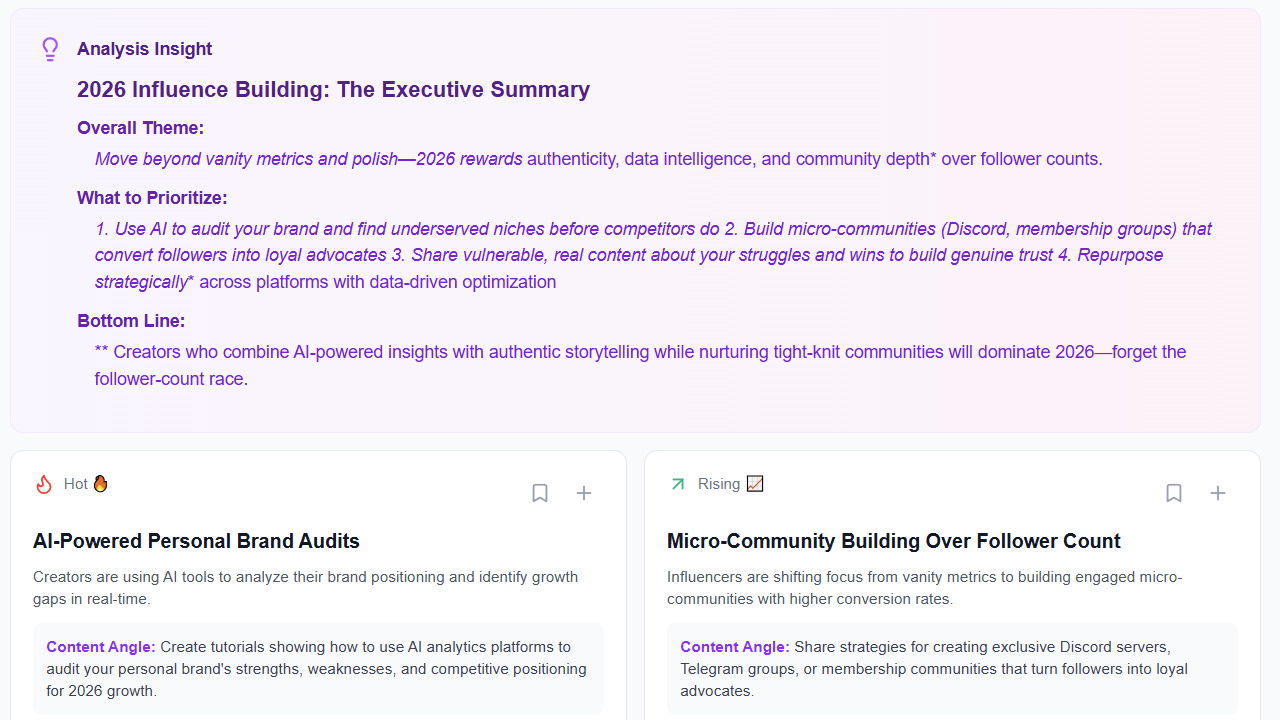
For example, you can use Trend Scout to discover topics before they peak, then generate content packages with the Content Generator (scripts, captions, and post drafts) so you keep your pipeline full. When it’s time to sharpen performance, Hook Lab helps you generate and score hooks so you can improve your first lines quickly. Finally, Content Planner & Content Queue let you plan weeks of content and auto-schedule, which is crucial when you’re trying to hit consistent publishing targets. Plans start at $9/month (Starter) and $19/month (Pro) with a 14-day free trial.
For most new creators publishing consistently, it can take anywhere from 3–8 weeks. If you post 2–4 times per week and optimize hooks/CTAs based on analytics, you’ll typically see momentum sooner. The key is consistency and iterating on what converts viewers into subscribers.
Start with the format you can execute reliably. Shorts/reels can help you reach first-time viewers quickly, while long-form content builds deeper trust and helps with sustained watch time. If you’re learning social SEO or searching discovery, blog content can also drive steady inbound traffic—then your CTA can convert readers into subscribers.
Track early signals like retention (or average watch time), engagement rate, comments, and saves/shares. If a specific hook or topic consistently earns more engagement, double down on that angle and format. Don’t wait for follower counts—use platform analytics to guide decisions during your first 30 days.
Choose a narrow niche and write a clear subscription promise so viewers know what they’ll get.
Run a 30-day content pipeline (about 16 posts if possible) instead of posting randomly.
Improve hooks and retention using repeatable structures and specific, non-clickbait promises.
Distribute every upload into multiple formats to increase first-time impressions and conversion opportunities.
Use specific CTAs and consider a starter series to turn viewers into subscribers faster.
Found this helpful? Share it:
iBuildInfluence Team
Creator growth strategist at iBuildInfluence. Helping content creators land brand deals, grow their audience, and build sustainable creator businesses.
More from iBuildInfluenceJoin thousands of creators using iBuildInfluence to land brand deals, grow their audience, and build real income.
Start Free ΓÇö No Credit Card Required