Income & Monetization
From Views to Income: Optimize Your YouTube Monetization Strategy
August 26, 2026
You've built an audience—now get paid. This step-by-step guide shows you the exact strategies to turn your social media following into a full-time, diversified income stream.

You've built an engaged following. Now it's time to actually get paid for it. Turning your social media presence into a full-time income isn't about luck—it's about strategy, diversification, and knowing exactly which monetization levers to pull at the right moment. This step-by-step guide shows you how to transition from side hustle to full-time creator without losing momentum or burning out.
Before you quit your job, you need real numbers. Most creators dramatically underestimate their earning potential because they only count one income stream. The average creator making six figures typically has 4-7 revenue sources working simultaneously—brand deals, ad revenue, digital products, community memberships, and more.
Start by auditing what you could earn right now. If you're on YouTube with 100k subscribers, your CPM (cost per thousand views) typically ranges from $2–$10 depending on niche and audience location. A video getting 50k views could earn $100–$500 just from AdSense.
Add brand partnerships: creators with 50k–100k followers can command $500–$2,000 per sponsored post depending on engagement rate. Then factor in affiliate commissions, digital products, or course sales. Create a simple spreadsheet documenting realistic income from each channel. This isn't your revenue target yet—it's your baseline.
The creators who successfully go full-time are the ones who know their numbers before they take the leap. You'll need a clear picture of monthly recurring revenue (MRR) and how much you actually need to live on. If your baseline shows you could make $3,000–$5,000 monthly with consistent content, you're closer to full-time viability than you might think.
A content creator business plan isn't just for investors—it's your roadmap to profitability. Your plan should include: your niche/positioning, target audience demographics, 12-month revenue projections by income stream, content format and posting schedule, brand partnership goals, and audience growth targets.
Start by defining which platforms generate the highest-quality income for your specific niche. A TikTok creator with 500k followers in entertainment might earn primarily through the Creator Fund and brand deals, while a finance educator with 50k YouTube subscribers might make more from digital products and sponsorships. Map out realistically where your revenue will come from in months 1–3, months 4–6, and months 7–12. Include conservative estimates: if you think you'll land one brand deal monthly at $1,500, budget for 0.5 deals to account for variability.

Your business plan should also include a financial runway—how many months of savings you have if income drops 50%. Most successful full-time creators had 6–12 months of expenses saved before making the jump. This isn't about being pessimistic; it's about being prepared. When you have financial runway, you can make better creative decisions instead of desperately chasing every brand deal that comes along.
Relying on a single income source is how creators burn out. YouTube algorithm changes, Instagram reach drops, or a brand relationship ends—and suddenly you're scrambling. The sustainable creators build multiple revenue channels so no single platform shift tanks your income.
Start with platform-native monetization (YouTube AdSense, Instagram Reels bonus, TikTok Creator Fund), then layer in brand partnerships and sponsorships. Next, add owned-audience revenue through email marketing and digital products. A creator might earn: $2,000 from YouTube ads + $3,000 from two brand deals + $1,500 from an email list selling a course + $800 from affiliate links + $500 from community memberships. That's $7,800 monthly from five distinct income sources. If YouTube changes its algorithm, you don't lose 80% of your income—you lose 26%.
Consider these high-impact monetization strategies: affiliate marketing (recommending products you genuinely use), digital products (courses, templates, guides), community membership (Patreon, channel memberships, exclusive Discord), coaching or consulting (1-on-1 calls leveraging your expertise), and brand partnerships (sponsored content). Start with 2–3 streams you can realistically maintain, then expand as you grow. Trying to launch seven income streams simultaneously is a recipe for burnout.
Brand deals are often the fastest path to five-figure monthly income, but only if you're strategic. Most creators leave money on the table because they don't know their market rate, don't pitch proactively, or accept every opportunity regardless of fit.
First, establish your rate. Influencer rates typically range from $100–$500 per post for micro-influencers (10k–100k followers), $500–$5,000 for mid-tier (100k–1M), and $5,000+ for macro-influencers (1M+). But this varies wildly by engagement rate and niche. A creator with 50k highly engaged finance followers might command more than someone with 200k gaming followers if their audience converts better. Research competitor rates in your niche by following similar creators and seeing what they're willing to post about.
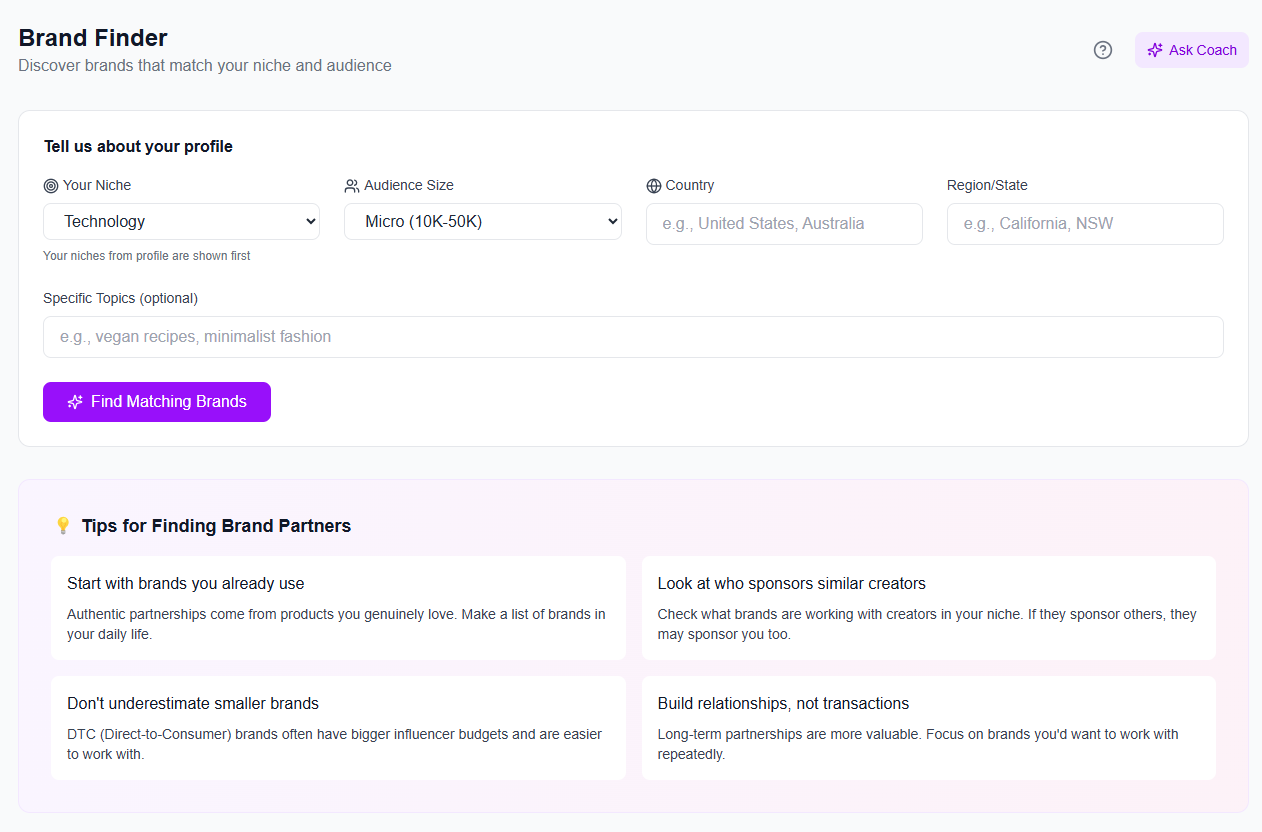
Second, be proactive. Don't wait for brands to find you. Identify 20 brands you genuinely love and use, research the decision-makers, and pitch them. A personalized pitch that shows you understand their audience and recent campaigns gets responses. Most creators only wait for inbound opportunities—that's money left on the table. You should be spending 5–10 hours weekly on outreach, pitching, and relationship-building with brand marketers.
Document everything in a simple CRM or deal tracker. Brands want to work with organized professionals. If you're juggling contracts, rates, and deliverables in your head, you'll miss opportunities and make mistakes.
Platform algorithms change. Accounts get hacked. But an email list is yours forever. This is why building owned channels is critical for full-time creator stability. You're not renting an audience from Instagram or YouTube; you're building one you actually own.
Start collecting emails immediately—even with a small audience. A creator with just 10k social followers but 3,000 engaged email subscribers has a more valuable asset than one with 100k followers and zero email list. Email subscribers convert at 10–50x higher rates than social followers, and they're not subject to algorithm changes.
Create a simple lead magnet (free checklist, template, mini-course, or exclusive content) and drive social traffic to an email signup. Aim for a 10–20% conversion rate from your social audience. Once you have an email list, you can sell digital products, promote affiliate offers, announce brand deals, and build direct relationships with your audience. Even a modest list of 5,000 engaged subscribers can generate $500–$2,000 monthly through strategic product launches.
Community platforms like Discord, Circle, or Mighty Networks also create direct revenue. Charge $5–$25 monthly for exclusive content, Q&As, or community access. A creator with 1,000 paying members at $10/month generates $10,000 monthly recurring revenue—pure profit once it's set up.
The creators making six figures aren't doing one thing exceptionally well—they're doing 4–7 things competently. Diversification is the difference between a side income and a full-time business.
Building a full-time creator income requires systems, and iBuildInfluence is purpose-built to streamline the business side of content creation. The Pitch Machine and Brand Finder tools eliminate hours of outreach work—Pitch Machine generates AI-written brand partnership proposals in seconds, while Brand Finder helps you identify and research decision-makers at companies that actually fit your niche. Instead of guessing your market rate, the Rate Calculator shows you exactly what creators with your follower count and engagement rate are earning, so you never undersell yourself again.
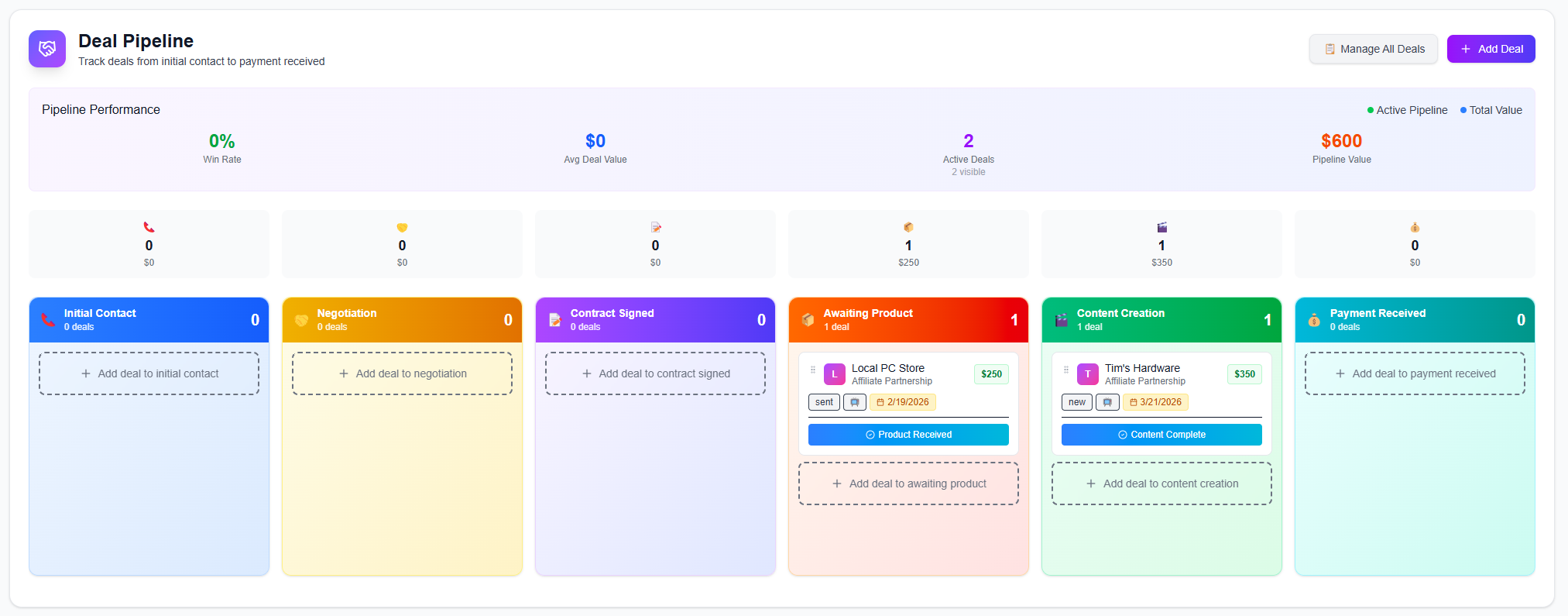
For managing the complexity of multiple income streams, the Revenue Pipeline (deal CRM) tracks every brand deal from initial pitch through final payment, while the Media Kit auto-generates with live stats so prospects see real, current performance data. On the owned-audience front, Fan Vault builds your email list and integrates directly with your content, while the Creator Hub gives you a customizable bio link page you fully control—replacing the need for Instagram's bio link limitations. Content consistency also matters for monetization, so the Content Planner and Content Queue let you plan weeks of content in advance and auto-schedule across platforms. Altogether, these tools save creators 10–15 hours weekly on business operations, giving you more time to focus on creation and audience growth.
There's no magic number. A creator with 20k highly engaged email subscribers and consistent sponsorship deals might earn six figures, while someone with 500k followers on a saturated platform might struggle. Focus on engagement rate, niche profitability, and diversified income rather than follower count alone. Most creators report needing at least $3,000–$5,000 in monthly recurring revenue to replace a day job confidently.
Brand partnerships typically generate income fastest if you're strategic. Identify 20 brands aligned with your audience, research decision-makers, and pitch directly with performance data. A single brand deal can generate $500–$5,000+ depending on your audience. Simultaneously, start building an email list and digital product—these take 4–8 weeks to generate revenue but become increasingly valuable over time.
Semi-passive income is realistic; truly passive income is rare. Ad revenue, affiliate commissions, and digital product sales generate money with minimal ongoing effort once set up—but you still need to create content consistently to maintain audience and traffic. Most full-time creators report 60–70% of income comes from semi-passive sources (ads, affiliates, products) and 30–40% requires active work (brand deals, coaching, services).
Calculate your current earning potential across all possible income streams before going full-time—most creators discover they're closer to viability than they think
Build a formal content creator business plan with 12-month revenue projections and a financial runway of 6–12 months of living expenses
Diversify across 4–7 income sources (ads, brands, email, products, community, affiliate) so no single platform change destroys your revenue
Master brand partnerships through strategic research, competitive rate knowledge, and proactive outreach—this is often the fastest path to significant income
Own your audience by building an email list and community; platform algorithms change, but direct relationships with your audience are permanent assets
Found this helpful? Share it:
iBuildInfluence Team
Creator growth strategist at iBuildInfluence. Helping content creators land brand deals, grow their audience, and build sustainable creator businesses.
More from iBuildInfluenceJoin thousands of creators using iBuildInfluence to land brand deals, grow their audience, and build real income.
Start Free ΓÇö No Credit Card Required