Income & Monetization
Monetize on YouTube’s New Rules: Best Revenue Mix
August 24, 2026
Views aren't enough to scale on YouTube. Discover how to master CTR, watch time, and retention to turn your audience into consistent income with our proven monetization strategy.
You can’t scale a business on views alone—especially as YouTube’s monetization signals evolve around watch time, CTR, retention, and traffic sources. The creators winning right now aren’t just “getting clicks”; they’re building episodes that earn more session time and more reliable traffic. This guide shows you how to optimize your content strategy so your views convert into income.
Think of YouTube monetization as a funnel, not a lottery. A high CTR is the doorway, retention is the walk from the doorway to the exit, and watch time determines how reliably you earn revenue through ads and long-term recommendations. Then traffic sources decide how stable your growth is: browse traffic (suggested videos), search traffic (intent), and external traffic (where you earn your initial viewers).
Here’s the practical way to map your current bottleneck. Pick one recent video and check four metrics in YouTube Studio (or your analytics stack): impressions, CTR, average view duration (and % viewed), and traffic sources. If CTR is low, your thumbnail/title aren’t earning the click. If CTR is strong but retention collapses, the opening hook or promise-to-content match is failing. If both are strong but traffic is mostly from one source (like external), your recommendations engine may not be “owning” distribution yet.
Example: Suppose Video A gets 100k impressions and a 3% CTR (okay-ish), but only 32% average view duration on a 10-minute video. Video B gets 60k impressions with a 4.5% CTR, but 55% average view duration. Over time, Video B will usually outperform because YouTube can infer higher viewer satisfaction and sessions. That’s how monetization changes affect creators: the algorithm increasingly rewards videos that deliver stable session value, not just clicks.
CTR is often where creators panic. They either over-optimize for clicks (leading to poor retention) or avoid testing entirely. The goal is high intent clicks—viewers who are primed for what they’ll see. A simple rule: your title and thumbnail should answer one question clearly: “What will I get in this video, and why should I care now?”
Use this mini-framework for YouTube CTR optimization: Specificity + Outcome + Credibility cue. For example, instead of “YouTube SEO Tips,” test “YouTube SEO Checklist (2026): Titles, Tags & Descriptions That Rank.” The difference is the “what” and “when.” Pair it with a thumbnail that visually reinforces the outcome—checkmarks, step numbers, or a visible before/after screenshot.
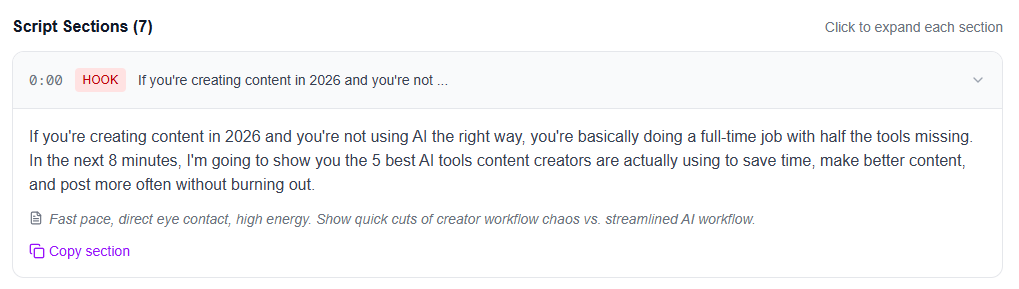
Then protect retention by aligning the first 30 seconds to the thumbnail promise. Your opening should include: (1) the viewer’s outcome, (2) why the old approach fails, and (3) a quick roadmap. A common mistake is spending 0–2 seconds on intros and then “starting later,” which kills early retention and undermines watch time. If your video promises “steps,” show step one early—within the first 10–20 seconds. iBuildInfluence's Content Generator helps build this for you:
If you’re wondering how this ties to the YouTube algorithm 2026 conversation: CTR still matters because it influences “click yield,” but retention tells YouTube whether the click was worthwhile. The best creators balance both—using packaging to attract the right audience, not just any audience. If you want a deeper look at why your videos aren’t performing even when you think the topic is right, see Why Your Videos Aren’t Growing (It’s Not the Algorithm).
Retention is where monetization gets real. It’s also where most creators accidentally sabotage themselves: they start strong, then wander, repeat, or bury the actual value. Your job is to engineer a viewing experience where the viewer always knows what’s next and keeps feeling progress.
Use “promise-to-structure.” Your video has a promise (what they’ll learn or achieve) and a structure (how you deliver it). Every segment should reinforce the promise. A practical method: outline your video in chunks of 30–90 seconds, and add a mini-transition at the end of each chunk. Transitions sound like: “Now that you understand X, here’s the mistake that ruins Y…” or “Let’s apply this to a real channel using my rate calculator approach…” That cadence helps retention because it reduces confusion.
Actionable retention checklist (edit-time):
• Remove intros longer than 8–10 seconds (unless your audience expects it).
• Start with the outcome, then explain why you know it.
• Keep “pattern interrupts” purposeful: show a chart, screen record, quick example, or summary—don’t add effects just to add them.
• Use “micro-summaries” every few minutes (“So far, the big rule is…”)—these restore momentum for skimmers.
• Cut “floating filler.” If a sentence doesn’t move the viewer toward the promised outcome, trim it.
Example: Imagine you’re making a tutorial about how to transition from side hustle to full time. You might structure it like: (1) The reality check in 45 seconds, (2) the revenue math in 2 minutes, (3) a decision framework in 2 minutes, (4) a weekly plan in 3 minutes, (5) common failure points in 1 minute, (6) recap + next steps. Notice how each segment answers “what should I care about right now?” That’s retention engineering.
Watch time isn’t just “make longer videos.” It’s about increasing the *effective* time viewers spend. You can build watch time by improving completion likelihood, increasing session value, and creating repeatable loops that bring viewers back to your channel. You’ll see the difference when you compare traffic sources: videos that earn browse/suggested traffic tend to build compounding watch time.
Start with a repeatable content loop rather than one-off topics. For example, if you run a YouTube channel about creator business systems, your loop could be: “Problem → Fix → Template → Example → Next video.” Then each upload becomes a node that naturally links to the next. In your end screens and pinned comments, point viewers to the next logical step, not random playlists.
Now connect watch time to your publishing rhythm. Inconsistent output can slow learning because you don’t accumulate enough data for improvements. That’s why batching and a clear content creator workflow matter. When you batch scripts and edits, you protect quality while still shipping frequently enough to test packaging and structure. If you want a workflow that helps you scale production without losing coherence, use The 90-Minute Batch Workflow: Script to Schedule a Week.
Practical watch-time experiments (run one per week):
• Experiment A: Add a “chapter checkpoint” every 2–4 minutes and measure % viewed at those points.
• Experiment B: Shorten the intro by 15–20 seconds; measure how early drop-off changes.
• Experiment C: Replace one generic example with a real channel case study (screenshots, numbers, and decisions). Measure average view duration.
Also track traffic sources. If external traffic spikes but browse traffic doesn’t, you’re likely driving short-term clicks rather than creating recommendation momentum. Aim to earn search traffic for evergreen topics (how-to queries) and browse traffic for “related” satisfaction (comparisons, checklists, and actionable frameworks).
“CTR gets you in the door—retention decides whether the house keeps the lights on.”
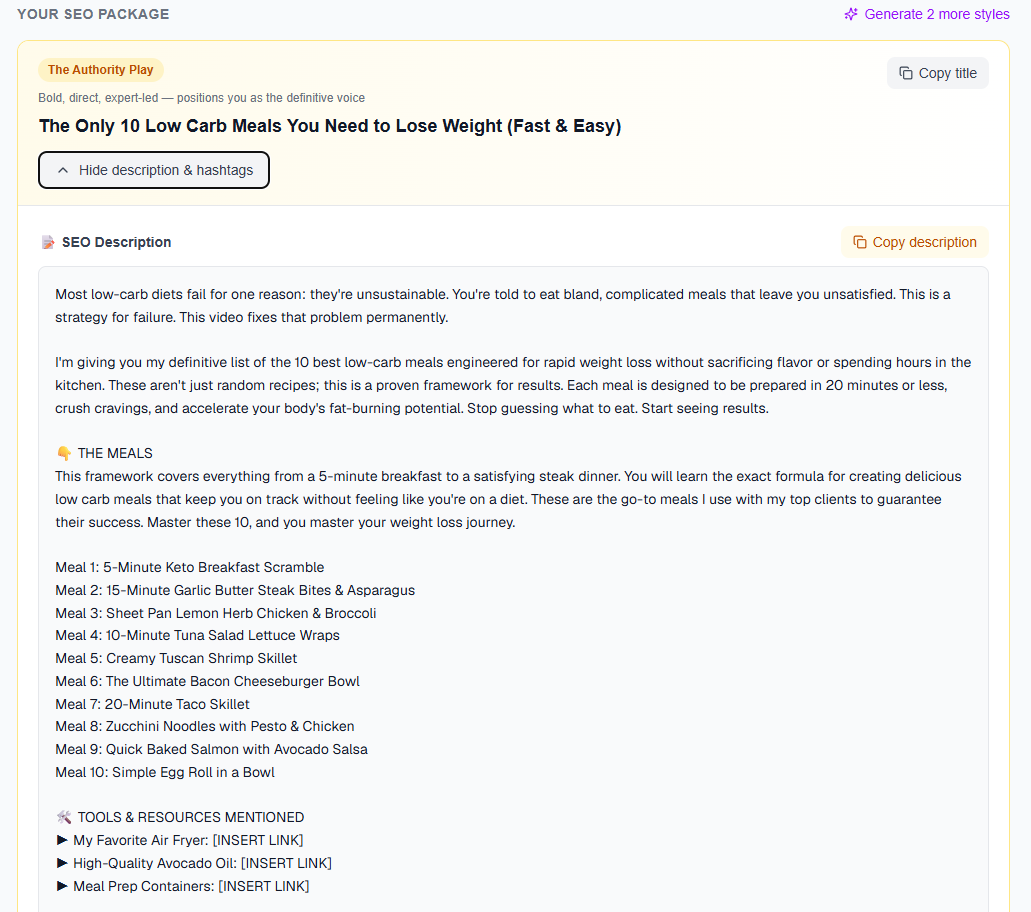
iBuildInfluence supports this strategy by helping you build repeatable, data-driven content—not just better ideas. For packaging and click performance, use SEO Engine to generate your title, video description and viral hooks per topic, so your opening matches the promise and improves early retention. Then use Content Generator to turn one concept into a full content package (script, outline, and captions), reducing “inconsistent structure” that commonly hurts watch time.
For measurement and iteration, Social Statistics helps you evaluate performance signals like reach, engagement rate, and content outcomes across platforms—so you can spot patterns between CTR and retention instead of guessing. Finally, Content Planner & Content Queue lets you schedule weeks of content and stay consistent, which makes experiments easier (you can run structured tests without burning your calendar). If your goal is how to get more views that ultimately convert into income, this “idea → execute → track → iterate” loop is the difference maker.
Monetization changes usually mean YouTube values viewer satisfaction signals more strongly, not just raw views. Small channels can benefit because targeted topics with strong retention can earn browse and suggested traffic faster than “viral but misaligned” content. Focus on CTR that attracts the right audience and retention that proves the promise.
In most cases, retention and watch time matter because they indicate satisfaction and influence distribution. CTR is critical for earning impressions, but low retention after a click can limit how far a video spreads. Track all four: CTR, retention, watch time, and traffic sources.
Build a mix of search-driven and browse-driven content. Search videos capture intent (how-to topics), while browse videos capture related interest (comparisons, checklists, and frameworks). Then use end screens, pinned comments, and series-like structure to move viewers to the next video in your content loop.
Monetization is a funnel: optimize CTR first, but protect retention to earn sustained watch time.
Use thumbnails and titles that communicate a clear outcome, then deliver the promise within the first 30 seconds.
Increase retention by segmenting your video every 30–90 seconds with purposeful transitions and micro-summaries.
Grow watch time through repeatable content loops, consistency, and smarter distribution across traffic sources.
Track experiments one variable at a time—so you can turn performance data into a better creator business strategy.
Found this helpful? Share it:
iBuildInfluence Team
Creator growth strategist at iBuildInfluence. Helping content creators land brand deals, grow their audience, and build sustainable creator businesses.
More from iBuildInfluenceJoin thousands of creators using iBuildInfluence to land brand deals, grow their audience, and build real income.
Start Free ΓÇö No Credit Card Required