Creator Tips
Why Your Email List Is Your Most Valuable Asset (And How)
July 14, 2026
Tired of juggling 8+ tools for your creator business? Discover the single platform that centralizes everything, boosting efficiency and your bottom line.
You're managing your content calendar in one app, tracking brand deal inquiries in your email inbox, monitoring analytics across three different dashboards, and keeping sponsorship rates in a half-finished Google Sheet. Sound familiar? Most creators operate this way—scattered, inefficient, and leaving money on the table. The missing piece isn't a better camera or a larger following; it's one centralized tool that brings every aspect of your creator business together. In this post, we'll explore why unified creator management platforms have become non-negotiable for scaling a sustainable creator business.
The average content creator uses between 8-12 different tools to run their business. You've got your scheduling app, your email service, your brand partnership tracker, your analytics platform, your invoicing software, and your note-taking app. Every tool does one thing well, but together they create a fragmented workflow that bleeds time and opportunity.
Here's what happens: A brand reaches out via DM about a potential deal. You open a notepad to jot down their details, then switch to your rate calculator to figure out pricing. Later, you open your email to send a pitch, but you're missing the exact metrics the brand asked for—which means another tab open to pull from your analytics platform. By the time you send the pitch, you've context-switched five times, wasted 20 minutes, and the brand has already moved on to a more responsive creator. Meanwhile, you still need to update your content calendar, track whether this deal is closing, and remember to follow up next week.
The data backs this up: creators who use 5+ disconnected tools report 40% more stress around business management and 30% lower deal closure rates compared to those using integrated platforms. Fragmentation isn't just an inconvenience—it directly impacts your revenue potential and consistency.
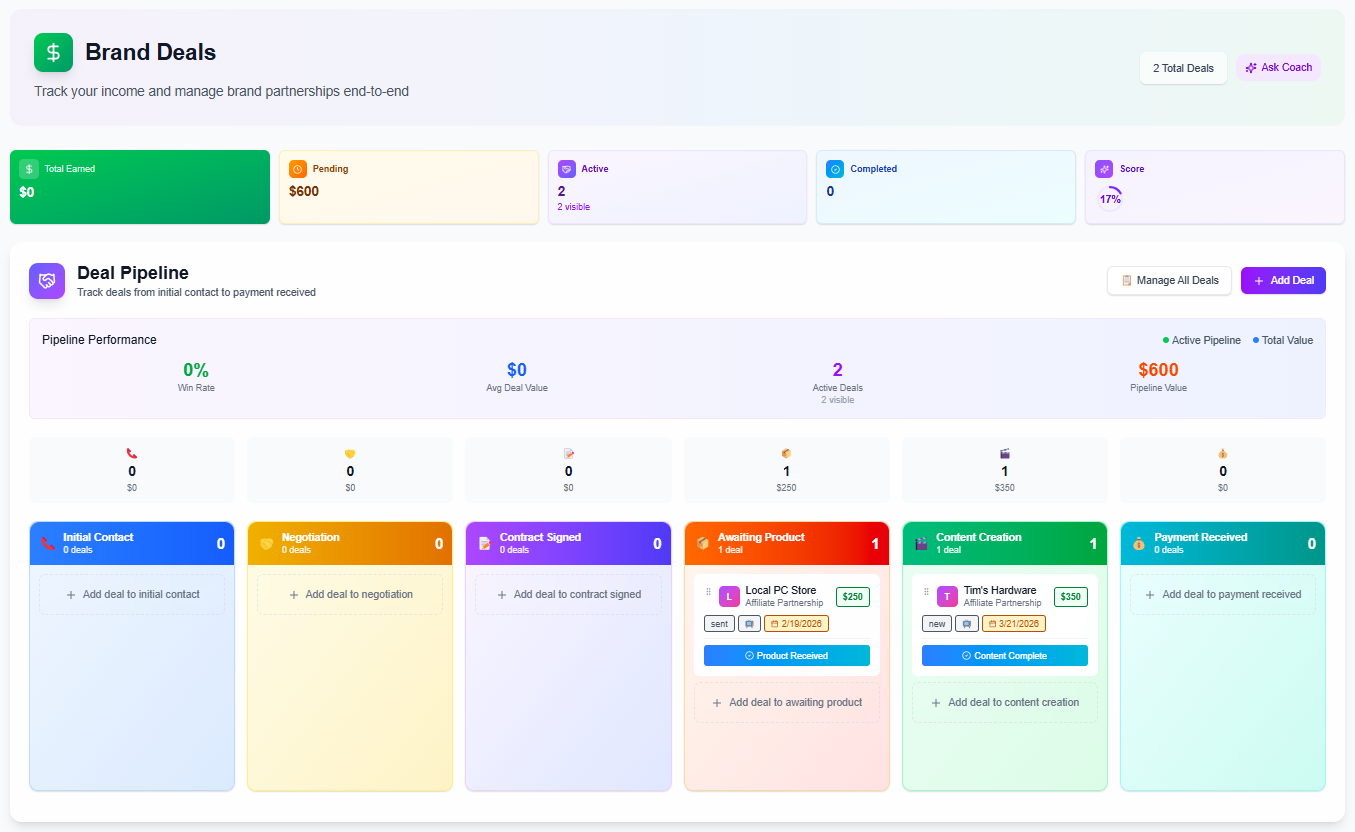
A true creator management platform consolidates every part of your business into one ecosystem where information flows seamlessly between modules. Instead of six tools talking to each other poorly (or not at all), you get one source of truth. Your media kit pulls live statistics from your analytics. Your brand pitches automatically include your current rates. Your content calendar syncs with your revenue pipeline so you can see which content types attract sponsorships. Your deal tracking shows you exactly where every partnership stands—from initial inquiry to payment received.
The practical benefit? Speed. A creator using a unified platform can respond to a brand inquiry with a professional pitch, media kit, and pricing in under 2 minutes instead of 20. That responsiveness converts more deals. One creator we spoke with went from closing 2-3 brand deals per month using scattered tools to 8-10 deals monthly after consolidating her workflow. Her rates didn't change. Her audience didn't grow overnight. The only variable that shifted was how efficiently she could capture and close opportunities.
Beyond speed, unified platforms create consistency. When your content planner, analytics, and rate calculator live in the same place, you can actually see which content pillars drive sponsorships, which posting schedules maximize engagement, and which niches command premium rates. This data-driven insight is impossible when your analytics live in one tool and your deal tracking lives in another.
Not all creator tools are equal. When evaluating a unified platform, look for these non-negotiable features: content planning and scheduling (so you can bulk-plan weeks at a time), brand partnership management with CRM functionality (to track deals from pitch to payment), integrated analytics across platforms (giving you the full picture of what's working), automatic media kit generation (pulling live stats), and rate calculation based on real market data (so you're never underpricing).
Beyond the basics, look for tools that save you creative time. An AI-powered content generator that turns one idea into a full package of posts, captions, and scripts can reduce your planning time by 50%. A viral hook generator that scores hooks before you post them means you're shipping higher-performing content without the trial-and-error phase. A trend scout that alerts you to rising topics before they saturate means you're always ahead of the curve—which is how you grow faster than creators still chasing yesterday's trends.
The best platforms also recognize that creators need both strategy and execution support. That means having a personalized weekly sprint or daily focus system that tells you exactly what to work on each day, based on your goals. When you remove the "what should I do first?" decision paralysis, your productivity multiplies.
The biggest fear when switching to a unified platform is losing data or disrupting your workflow during the transition. Here's how to do it smoothly: Start by auditing everything you're currently tracking. Spend 30 minutes listing every tool you use and what data lives there. Most creators are surprised—that spreadsheet has your sponsorship history, that note app has brand contact info, and your calendar has content ideas buried in the descriptions.
Next, choose a platform and spend one week importing or re-entering your essential data. This is tedious but strategic: as you migrate your data, you'll naturally clean it up. Delete old contacts. Archive closed deals. This reset actually improves your workflow immediately. Then, commit to using the new platform for 30 days before jumping back to your old tools. The learning curve is real, but most creators find their efficiency wins within the first two weeks.
Finally, use the platform's features you're comfortable with first. If scheduling feels natural, start there. If brand management resonates, build that workflow next. Layer in analytics, content planning, and community tools as you become confident. You don't need to use everything on day one—you just need to stop fragmenting.
Consider the journey of a mid-tier creator with 250K followers across YouTube and TikTok. Six months ago, she was managing her own brand outreach, responding to 50+ brand inquiries monthly but only closing 3-4 deals. She was also posting inconsistently, burnt out from juggling creation, outreach, analytics, and invoicing across different platforms. After consolidating to one platform, three things happened: First, her content workflow became predictable—she could plan two weeks ahead, batch-create content, and schedule it once. Second, her brand deal pipeline became visible. She could see where each inquiry was stuck and why. Third, her revenue nearly doubled in three months, not because she pitched more aggressively, but because she pitched smarter and closed faster.
This isn't a rare story. Across the creator economy, the pattern is consistent: fragmentation leads to inconsistency, inconsistency kills growth, and unified platforms fix both. The creators scaling hardest aren't necessarily the most talented or the most connected—they're the ones who've systematized their workflow so they can focus energy on creation and strategy instead of tool-switching.
The difference between a creator earning $5K monthly and one earning $50K monthly often isn't talent or audience size—it's operational efficiency. A unified platform turns your creator business from a side hustle into a machine.
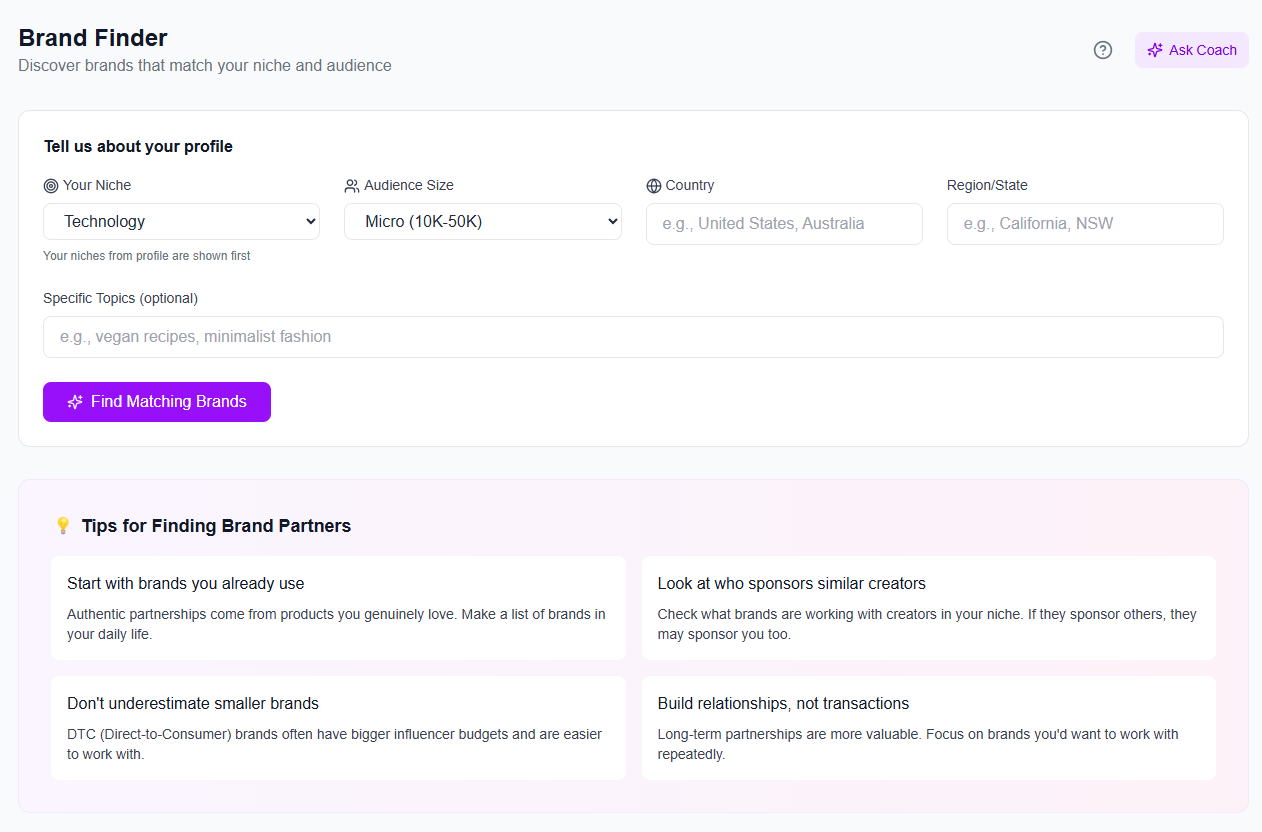
iBuildInfluence is purpose-built for this exact problem. As an all-in-one creator management platform with 36+ integrated tools, it eliminates the need to juggle multiple apps. On the brand partnership side, tools like Pitch Machine generate professional brand pitches in seconds, while the Revenue Pipeline acts as a CRM that tracks every deal from initial pitch through payment. Your Rate Calculator ensures you're never guessing on pricing—it's based on real creator market data. The auto-generated Media Kit pulls live statistics, so every brand deck you send reflects your current metrics without manual updates.
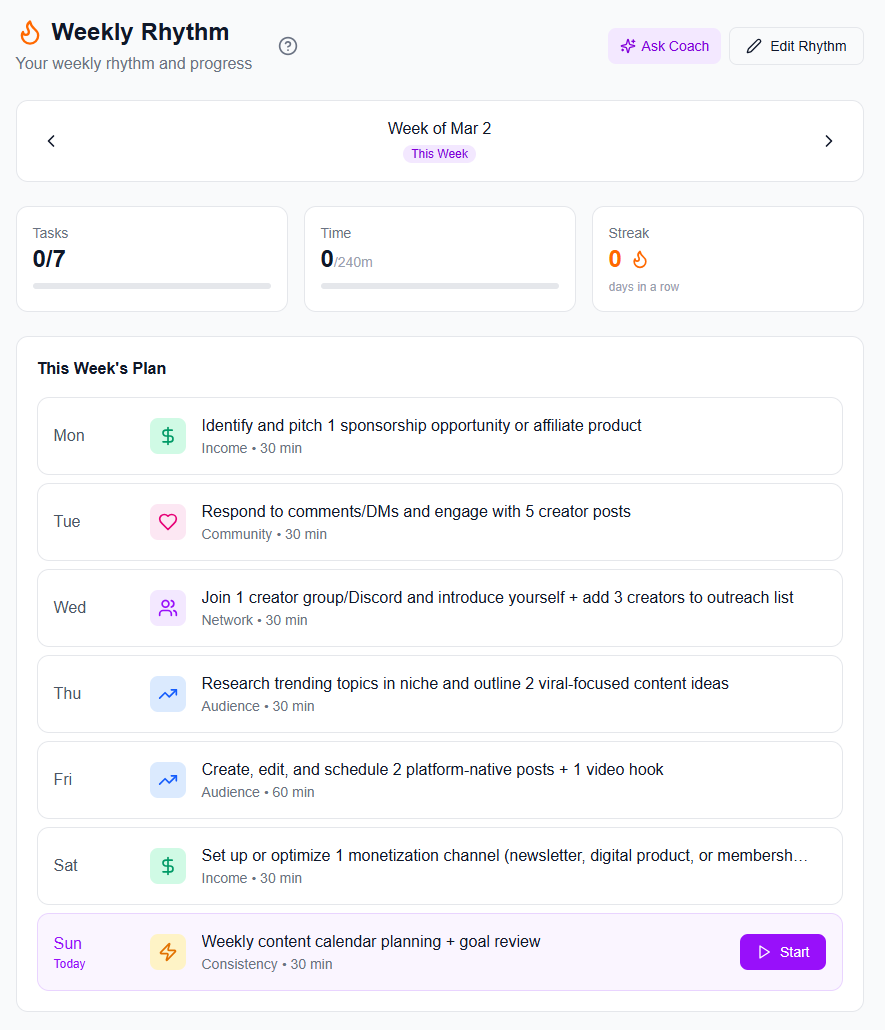
On the content side, the platform's Content Generator turns one viral idea into a complete content package with AI-written posts, scripts, and captions. The Content Planner and Content Queue let you plan weeks of content at once and auto-schedule across platforms. Hook Lab generates 50 hooks per topic and scores them for virality potential, while Trend Scout alerts you to rising topics before saturation. Your Social Statistics tool provides cross-platform analytics in one dashboard—no more switching between YouTube, TikTok, and Instagram analytics separately. To keep you accountable, Creator Coach provides personalized strategy guidance, and the Weekly Sprint feature tells you exactly what to create and promote each day based on your goals. All of this lives in one place, eliminating context switching and keeping your entire creator business aligned and visible.
A scheduling tool only handles content posting. A creator management platform handles content creation, posting, analytics, brand partnerships, deal tracking, invoicing, audience building, and strategy—all in one integrated ecosystem. It's the difference between owning a single power drill and owning a full workshop.
Most creators save 8-12 hours weekly by eliminating tool-switching and manual data entry. That's an entire workday. If you're earning per hour or per deal, that's directly convertible to revenue. For a creator earning $5K monthly, that time-back alone might add $1-2K monthly once reinvested into pitching and creation.
There's a 1-2 week learning curve, but most creators find their efficiency actually improves within 30 days because they're not bouncing between six tools anymore. The key is committing to the new platform for a full month before reverting. Migration takes a few hours, but you only do it once.
Creators using 5+ fragmented tools report 40% higher stress and 30% lower deal closure rates compared to those using integrated platforms
Unified creator platforms consolidate content planning, brand deal management, analytics, and community building into one source of truth, eliminating context switching and wasted time.
Speed is a direct revenue driver—creators using centralized platforms close deals 5-10x faster because they can respond to brand inquiries with professional pitches and media kits in minutes.
The best platforms combine execution tools (scheduling, content generation, analytics) with strategy tools (trend discovery, weekly sprints, goal tracking) so you're always focused on high-impact work.
Consolidation typically saves 8-12 hours weekly and pays for itself within the first month through improved deal closure rates and consistency
Found this helpful? Share it:
iBuildInfluence Team
Creator growth strategist at iBuildInfluence. Helping content creators land brand deals, grow their audience, and build sustainable creator businesses.
More from iBuildInfluenceJoin thousands of creators using iBuildInfluence to land brand deals, grow their audience, and build real income.
Start Free ΓÇö No Credit Card Required