Creator Tips
The 90-Minute Batch Workflow: Script to Schedule a Week
June 6, 2026
Your email list is resilient, profitable, and owned. Learn why it matters, how to grow it, and what to send to convert subscribers.
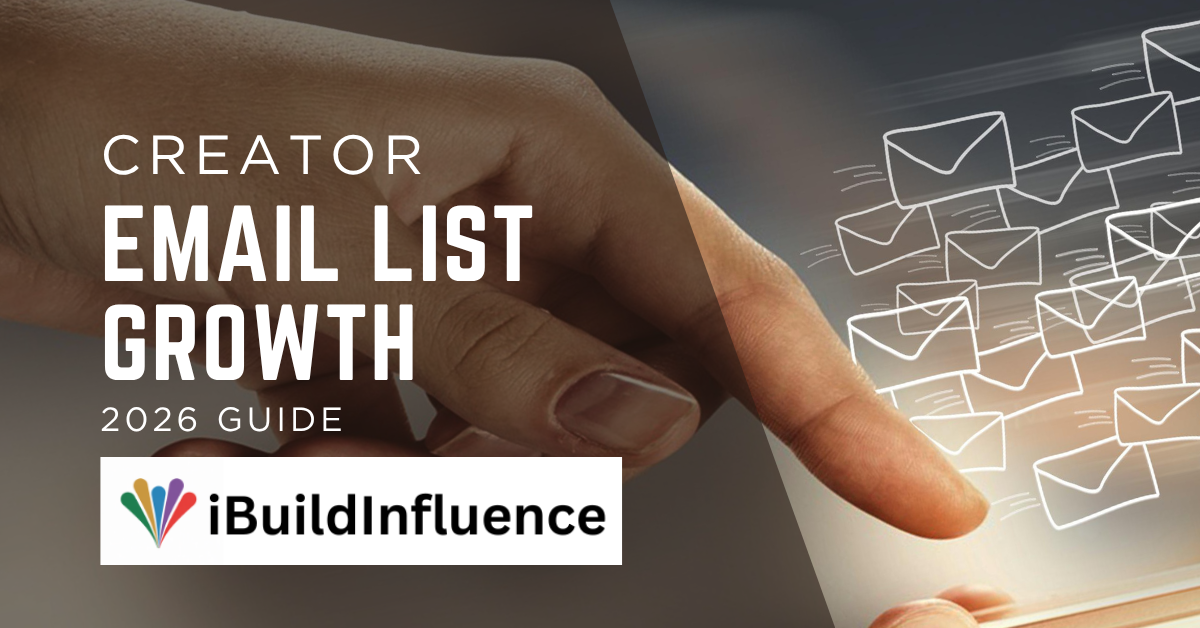
Your audience doesn’t belong to you—until you build an email list. Social platforms can throttle reach overnight, algorithms change, and trends move on, but email inboxes stay. If you want a stable creator income and a real content creator business plan, your list is the foundation.
When you build followers on Instagram, TikTok, YouTube, or X, you’re building on platforms you don’t control. They decide who sees your content, how often, and what features you’re allowed to use. That’s why many creators see a “black box” effect: you do everything right, then reach drops because of an algorithm update.
Email is different because you own the relationship. You capture first-party data (email address + preferences), and your message goes directly to the inbox—no need to “earn” distribution every time. This is also why email tends to outperform other channels for conversion. In ecommerce, email marketing revenue is often cited as driving a major share of total revenue; similarly, creators use email to turn attention into sales of sponsorships, coaching, affiliates, courses, or sell digital products creator offers. The goal isn’t “email versus social.” The goal is to make social traffic serve a system you control.
Most creators treat email like a broadcast channel: “I posted, so you should care.” That approach underperforms because email is not just reach—it’s timing and trust. The best-performing email programs work like a sales funnel, where the subscriber gradually moves from curious to convinced to customer. A single great post can spike views. A well-designed email sequence can compound results for months.
Here’s a practical example. Imagine you’re a fitness creator and you post short videos. You run a lead magnet called “7-Day Meal Prep Plan for Busy People”. New subscribers enter a 7-day welcome sequence:
Day 0: Deliver the free plan + a simple promise (what they’ll be able to do).
Day 1: Teach one concept: how to batch cook to save 60 minutes.
Day 3: Share a quick case study: “I tried this with a busy schedule—here’s what changed.”
Day 5: Soft pitch: recommend a related product (e.g., a grocery list template pack) and explain who it’s for.
Day 7: Ask a question + invite replies (“What’s hardest for you—prep or cravings?”).
That sequence does more than “announce.” It builds identity (“I’m the kind of creator who helps people like me”), expectation (“I get value quickly”), and momentum (“you’re already in the journey”). Over time, your list becomes a warm audience that requires less persuasion because they’ve already experienced your best content.
And this compounding effect is exactly what’s hard to replicate on social. You can post for years, but you can’t reliably re-contact everyone who watched your earlier content. With email, you can.
Many creators try to grow an email list with a generic signup button and a vague “free resource.” That’s why they don’t see momentum. People don’t enter their inbox for “updates.” They enter for a specific outcome. If your lead magnet is not tightly matched to your audience’s pain, you’ll get low opt-in rates and even lower conversion.
Start with one offer that solves one problem. Then build a small funnel around it. Use this checklist to create a lead magnet that converts:
Pick one clear promise: “Get X result in Y time without Z headache.”
Use one format: checklist, template, swipe file, mini course, or calculator (don’t overcomplicate).
Show the value quickly: deliver the first “aha” within the first 20% of the asset.
Match the lead magnet to your content: if you talk about YouTube hooks, your lead magnet should help with hooks (not “content ideas” broadly).
Make the CTA specific: “Get the hook formulas” beats “Join my newsletter.”
For creators, a great lead magnet is often a practical tool. For example, a YouTube educator can offer “The Hook Lab Swipe File” (a set of 20 hooks per niche) or a “Thumbnail & Title Scorecard.” You can also build a content creator workflow style template: “My 30-day posting schedule for small channels” or “A weekly batch script + shot list.”
Now the system part: don’t rely on one signup page. Place opt-ins where buyers already are—on your content platform profile, at the end of your videos, within pinned comments, and in your most helpful posts. Then connect that signup to an automated welcome email. The welcome flow is what turns “traffic” into “subscribers,” and subscribers into customers.
Once you have subscribers, the next challenge is consistency and relevance. The reason email “fails” for many creators isn’t that the channel is bad—it’s because the emails are inconsistent, too salesy, or not aligned with subscriber expectations. Your job is to earn the right to sell by providing value on a predictable rhythm.
A simple, creator-friendly email structure is the “Value → Proof → Next Step” pattern:
Value: Teach one thing your audience can do today (a framework, checklist, or example).
Proof: Use a quick personal result, screen recording, or breakdown (“Here’s the exact change I made”).
Next step: Invite a low-friction action: reply, download, watch a linked resource, or join a workshop.
Try a weekly cadence like this:
Email 1 (Teach): One lesson + one template or example.
Email 2 (Build trust): A behind-the-scenes story—what you tried and what happened.
Email 3 (Offer): A real offer with clear “who it’s for” and “who it’s not.”
Offers work best when they connect to the subscriber’s stage. New subscribers want guidance; older subscribers want outcomes, and they’ll respond to a stronger call to action. Segmenting helps here. Even basic segmentation—“topic interest” or “stage” (new vs. active buyers)—can lift performance because you send the right content to the right people.
Also, don’t ignore subject lines and preview text. You’re not writing for yourself; you’re writing for the person deciding whether to open right now. If you want more conversions from your how to get more views mindset, apply that same psychology to email: clarity, specificity, and relevance win.
Building an email list without measuring performance is like posting YouTube content without checking CTR or retention. You’ll feel busy, but you won’t know what to fix. The metrics you track depend on your goal, but most creator programs should watch four core indicators:
Growth rate: net new subscribers per week.
Deliverability: whether your emails land in inboxes (watch bounces, spam complaints, and domain reputation).
Engagement: open rate and click rate (opens matter, but clicks are often more meaningful).
Revenue or conversions: purchases, affiliate clicks, bookings, or leads generated.
Here’s a practical improvement approach. If opens are low, test subject lines and preview text. If opens are decent but clicks are low, your content might be too general or the call-to-action isn’t specific. If clicks are strong but sales are weak, your offer (or your landing page) may need better alignment with the email message.
To stay organized, build a lightweight content and testing workflow. One example: write a single email each week, reuse your best frameworks, and run one improvement test per month (subject line style, CTA type, or the “offer story” angle). If you also repurpose content into short video/short posts, use your email list as the long-term conversion engine and social as the discovery layer.
If you’re using YouTube as a top-of-funnel, the same principles of packaging content apply. For more on how to make people click, read: YouTube CTR Mastery: Thumbnails, Hooks & Viewer Psychology. The takeaway—match your packaging to your audience’s desire—translates directly to email subject lines.
“An algorithm can change overnight. An inbox relationship grows every time you deliver value.”
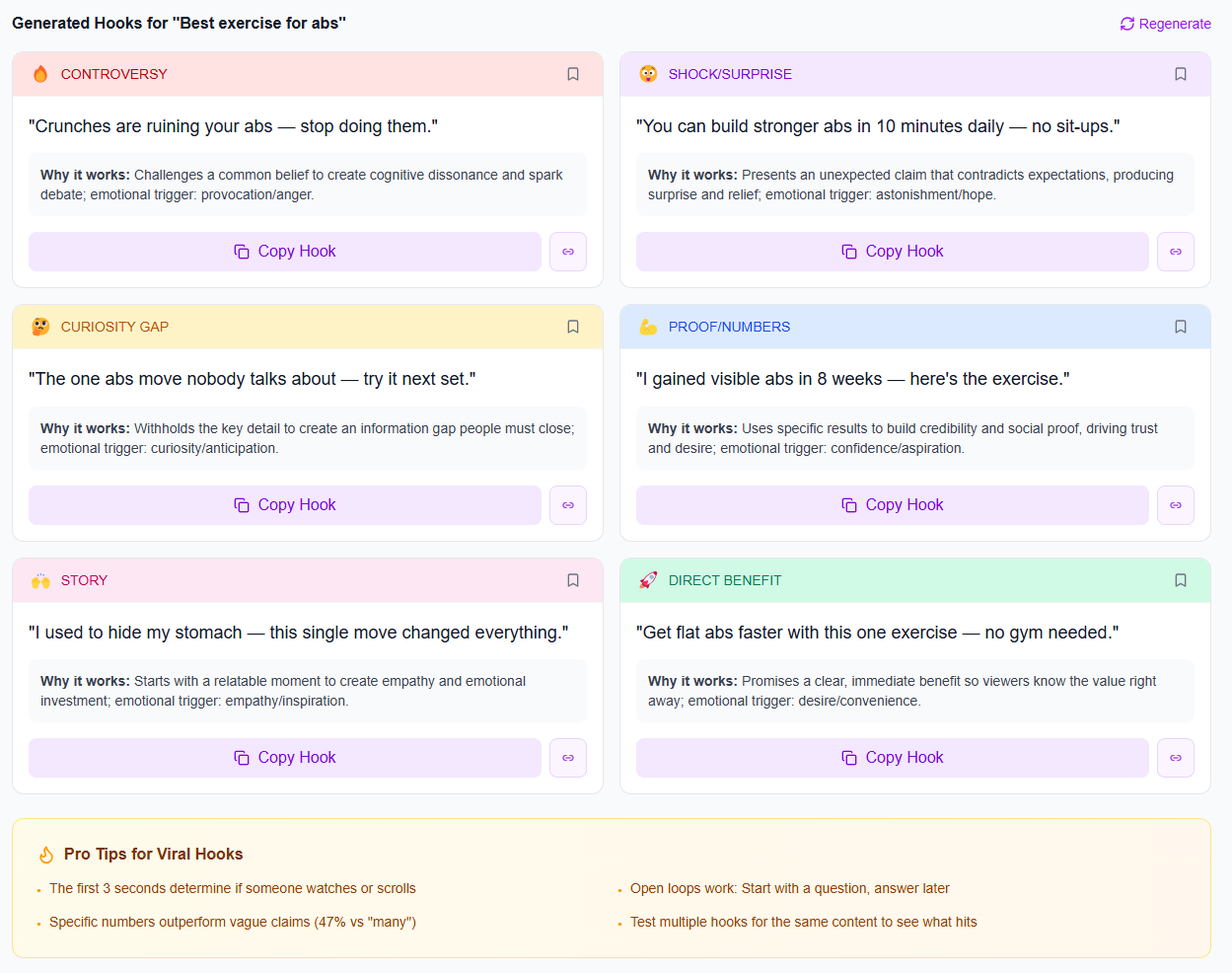
iBuildInfluence supports email-list growth with creator-first tools that help you build consistent, high-performing content that turns into subscribers. For example, the Content Generator can help you turn one idea into a complete email package—welcome sequence drafts, weekly newsletter outlines, and CTA variations—so you’re not starting from scratch every time. You can also use Hook Lab to generate and score email subject line angles by topic, which makes testing less guesswork and more repeatable.
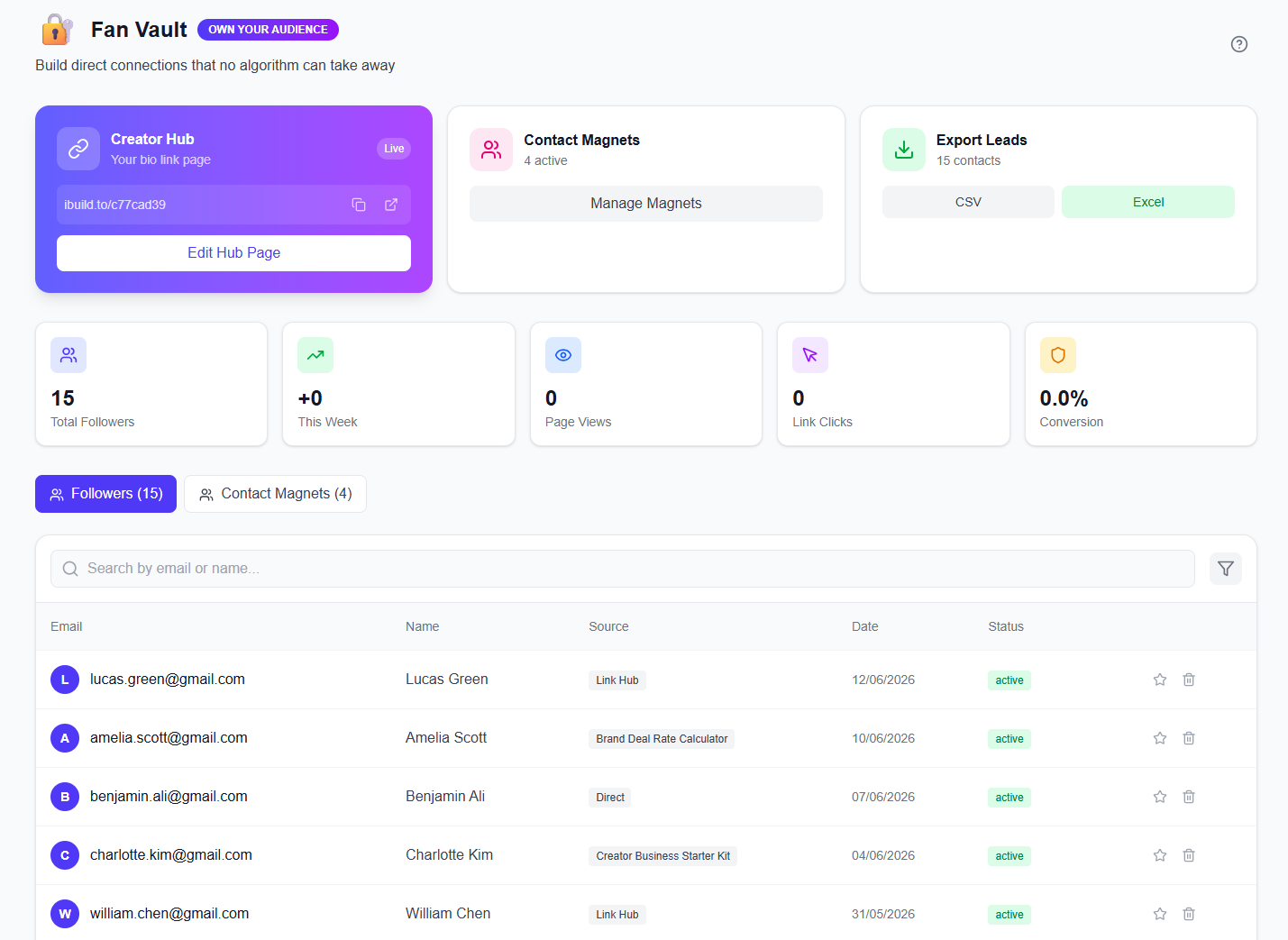
Once you’re ready to collect emails and nurture subscribers, iBuildInfluence makes it easier to operationalize your workflow. Use Fan Vault to help capture and make use of the emails you have in your list. The Fan Vault is a tool kit which gives content creators both a small landing page which offers links, and email swap for value (enter your email to download my guide style webpage). The capture of emails is automated as fans are using the site.
Start with one lead magnet that solves one specific problem for your target viewer. Promote it in the places you already exist (profile bio, pinned comment, and your next helpful content), then automate a welcome sequence that delivers value immediately.
Use a consistent structure: teach one useful thing, add proof or a quick story from your process, and end with a low-friction next step. A simple cadence—educational emails plus occasional behind-the-scenes and offer emails—usually performs better than constant selling.
Many creators see measurable growth in 30–90 days if their lead magnet matches their audience and they promote consistently. Sales can start early, but the bigger gains typically come after your welcome sequence and repeat newsletter content have run for a few months.
Your email list is an owned asset, unlike social followers that depend on changing algorithms.
Email converts better over time when you use sequences that build trust, not just broadcasts.
Growth comes from a repeatable lead magnet + promotion system, not a one-time signup page.
Send value using a clear pattern (Value → Proof → Next Step) and keep offers aligned to subscriber stage.
Measure engagement and conversions so you can improve subject lines, content, and CTAs systematically.
Found this helpful? Share it:
iBuildInfluence Team
Creator growth strategist at iBuildInfluence. Helping content creators land brand deals, grow their audience, and build sustainable creator businesses.
More from iBuildInfluenceJoin thousands of creators using iBuildInfluence to land brand deals, grow their audience, and build real income.
Start Free ΓÇö No Credit Card Required