Content Strategy
Influencer Marketing for YouTubers: Partnerships & Sponsored Content That Converts
June 20, 2026
Posting more rarely grows you in 2026. Learn the smarter system: better hooks, tighter distribution, and content repurposing that earns attention.
In 2026, “post more” is the most expensive piece of advice creators can follow. More posts don’t automatically mean more reach—especially when distribution is competitive and attention spans are shorter than your production cycle. The smarter approach is to post less *but better*, then amplify what already earns traction using a repeatable content creator workflow.
Let’s be blunt: if your content isn’t earning fast attention, posting more just increases your waste. Platforms don’t reward volume first—they reward performance signals like watch time, completion rate, saves, shares, and click-through. For example, on short-form video, even a small drop in average watch time can shrink how far your video travels. On YouTube, your “YouTube algorithm 2026” context is similar: impressions come from search and suggested, and those impressions convert only if your thumbnail and title earn clicks.
So instead of asking “How often should I post?”, ask “How efficiently does each post earn attention?” A practical way to measure this is to track two metrics per post for the first 48–72 hours: (1) engagement rate (comments + shares + saves relative to reach) and (2) retention/CTR proxy (for Reels/TikTok: average watch time; for YouTube: CTR from impressions). If you’re posting frequently but these metrics don’t improve, you’re just scaling the wrong behavior.
Real example: A creator posts daily for a month. Their reach averages 2,000 per post and engagement rate averages 0.8%. Then they stop posting daily and focus on one topic they know converts. They publish 3 videos in 10 days with stronger hooks and clearer offers. Reach jumps to 6,000–10,000 and engagement rate rises to 2.5%. The key wasn’t more output—it was better attention efficiency.
Most creators post “content ideas.” High-performing creators post content packages: a specific hook pattern that matches viewer intent, a tight value flow, and proof that reduces skepticism. If you want growth in 2026, your hook must earn the next second, and your structure must keep viewers moving forward. This is where “posting more” often fails—random posting creates random viewer expectations, which hurts performance signals.
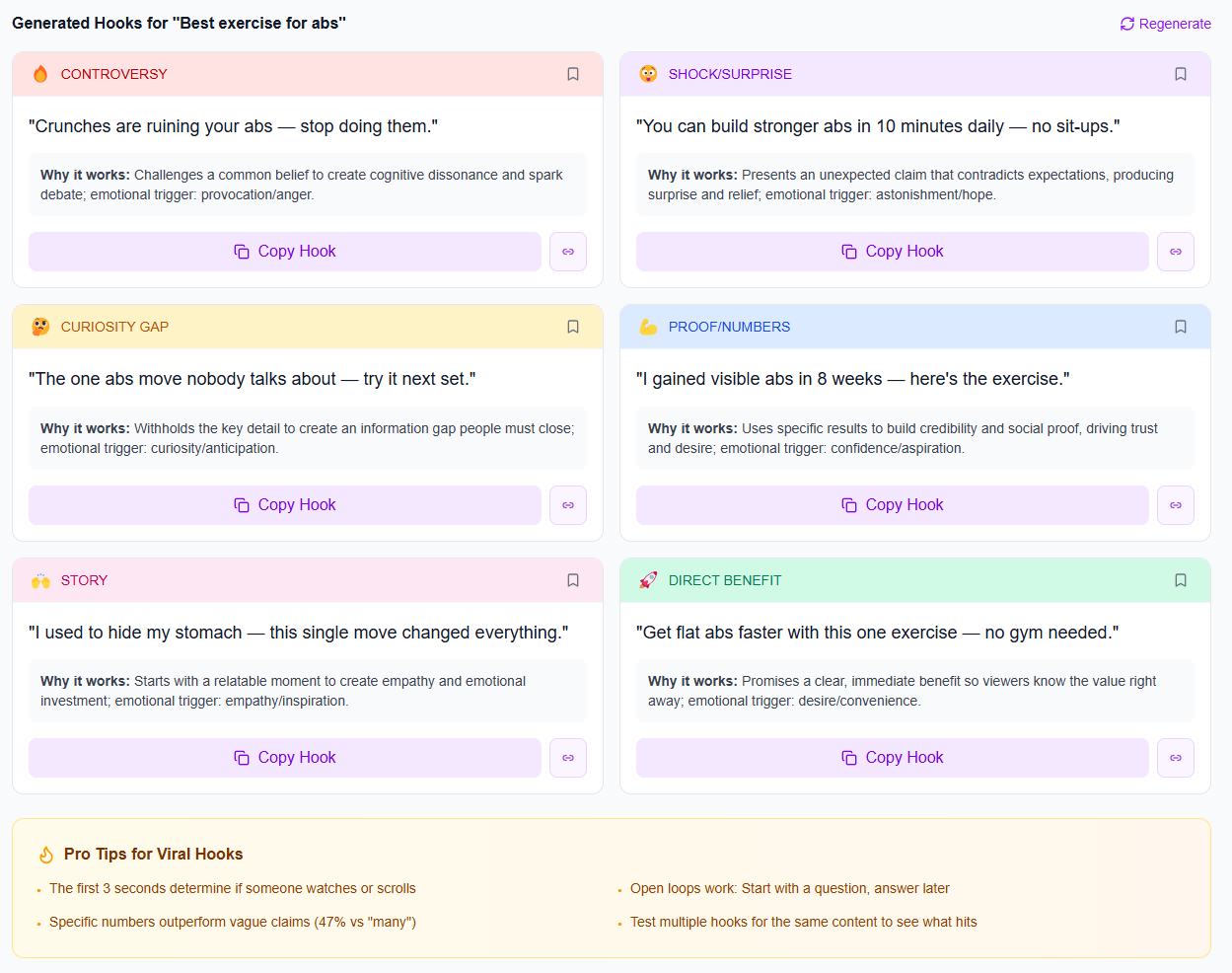
Here’s a simple framework you can use for any platform: Hook → Value → Proof. Hook: make a specific promise or reveal a mistake in the first 1–2 seconds. Value: deliver the core instruction without detours (use examples, steps, or templates). Proof: show a result, a brief case study, a screenshot, or a before/after. Even if your topic is broad, your delivery should be precise.
Actionable steps you can do today:
1) Choose one “core topic cluster” for the week (e.g., “YouTube SEO in 2026,” “creator income,” or “how to grow gaming channels”). 2) Generate 10–15 hook variants for that cluster, focusing on common viewer pain points (“why your CTR is low,” “what to do instead,” “mistakes that kill reach”). 3) Film 3–5 short videos using only the top-scoring hooks. 4) Iterate based on outcomes: keep the hook pattern that increases retention/CTR, and revise everything else if needed.
If you’re working on YouTube specifically, it helps to pair this system with thumbnail and title optimization, because your first job is to earn the click. This ties into YouTube CTR Mastery: Thumbnails, Hooks & Viewer Psychology—a reminder that “good content” still needs a strong front door.
Going viral is unpredictable. Compounding growth is predictable. Repurposing is how you turn one strong idea into multiple distribution hits without constantly “starting over.” The mistake creators make is repurposing as an afterthought: they upload the same clip everywhere with minimal edits. In 2026, that approach often reduces performance because each platform rewards different formatting and viewer behavior.
Instead, repurpose with intent. Take one “pillar idea” and break it into platform-native formats. For example:
YouTube pillar (8–12 minutes): teach the full concept with examples.
Shorts/Reels/TikTok (15–40 seconds): extract the best 1–2 steps from the pillar video and lead with the strongest hook.
Carousels (6–10 slides): turn the same concept into a checklist or framework with one actionable takeaway per slide.
Stories (daily/near-daily): use micro-updates: behind-the-scenes, quick lessons, or polls tied to the pillar topic.
This is how you grow without burnout. You’re not “posting more.” You’re investing once and distributing strategically. If you want a repeatable schedule, build a week plan around one or two pillar topics and commit to producing derived assets. A useful reference for building an actual creator rhythm is The 90-Minute Batch Workflow: Script to Schedule a Week—batching reduces the friction that causes inconsistent posting quality.
Posting more can feel productive, but without feedback loops it becomes guesswork. In 2026, creators who win are the ones who treat content like a system: test, learn, and scale. That doesn’t mean obsessively tracking every number. It means watching a few key signals that tell you what to double down on.
Here’s a practical analytics plan you can run weekly:
Step 1: Identify the top 20% performers. For each platform, list your top 5 posts from the last 30 days based on engagement rate and (where available) retention or click-through.
Step 2: Reverse-engineer the pattern. For the best posts, note: the first sentence/hook style, the topic angle, the length, the CTA type, and whether you used screenshots, examples, or “myth vs truth.”
Step 3: Create a “winner remake.” Make 2–3 new posts that use the same hook pattern and structure but with a different example or scenario.
Step 4: Create a “challenger test.” Only one change per post: test a new hook or a new CTA. Don’t redesign everything at once.
This approach helps you answer “how to get more views” with fewer experiments. You’re not increasing output blindly—you’re increasing *learning velocity*. It also protects you from the common failure mode: posting frequently until the algorithm eventually “figures you out,” which can take months and burn your creative energy.
And if you’re splitting time across platforms, track performance consistently. Cross-platform analytics matters because you might be “doing everything right” on one app while struggling on another due to format mismatch. The goal is alignment between content type and audience behavior, not just consistency for consistency’s sake.
Consistency isn’t “every day.” Consistency is publishing on a rhythm you can maintain *without reducing quality*. Posting more often fails because it forces creators into daily pressure, which leads to weaker hooks, rushed edits, and content that doesn’t match the audience’s attention patterns. The result: performance drops, motivation drops, then the posting frequency drops again—so the cycle restarts.
A better model is batch creation and scheduled distribution. Batch your scripting and filming so you can focus on quality decisions during editing: tightening the first 1–2 seconds, removing filler, and improving clarity. Then schedule posts so you don’t rely on last-minute motivation.
Try this batching template:
• Day 1 (90 minutes): plan 1 topic cluster + write 5 hooks + script 2–3 videos.
• Day 2 (90 minutes): film everything in one session.
• Day 3 (90 minutes): edit and package: hook screens, captions, CTAs, and thumbnail frames where relevant.
• Day 4: schedule and add final checks (hashtags, titles, descriptions, and links).
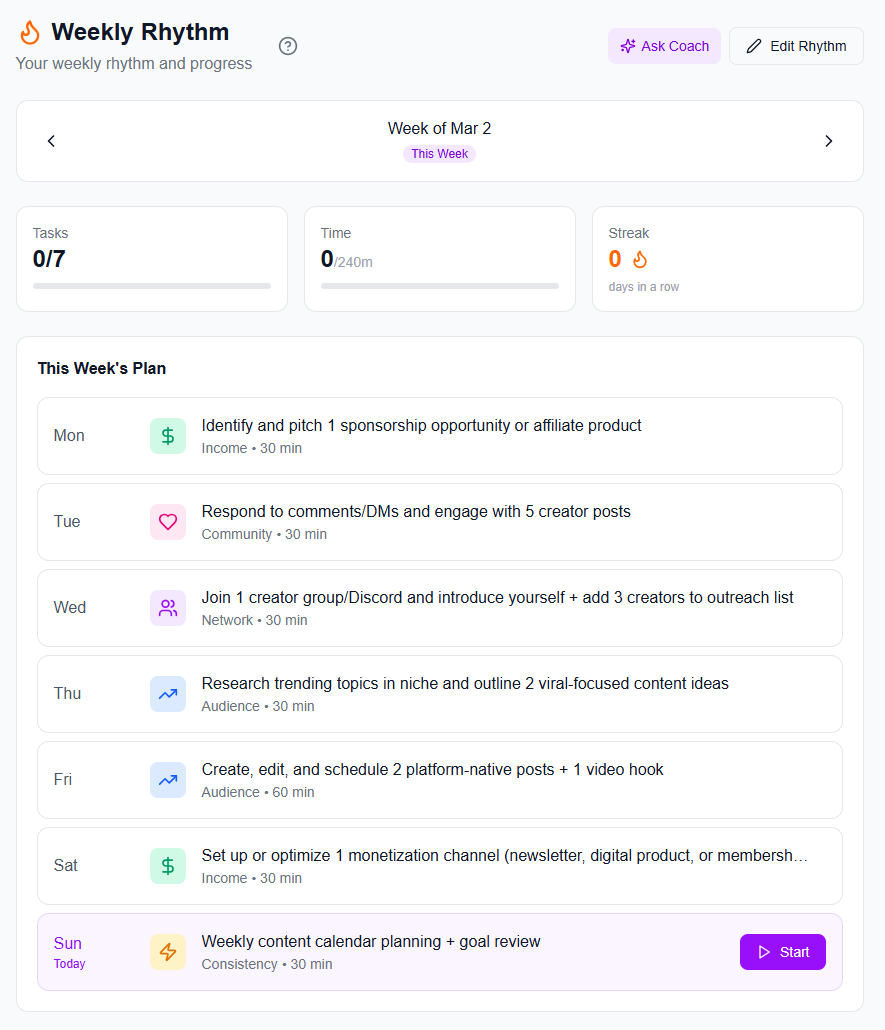
If you want a YouTube-friendly version of this workflow, use The 90-Minute Batch Workflow: Script to Schedule a Week as a starting point. It’s designed for creators who want output with intentional quality rather than endless improvisation.
Posting more doesn’t beat algorithms—attention efficiency does. Improve the first second, tighten the value, and scale what proves itself.
If you want to stop guessing and start scaling, iBuildInfluence can support the smarter approach: less random output, more testing and refinement. In the BUILD YOUR AUDIENCE pillar, the Hook Lab helps you generate multiple viral hook options per topic and score them so you can pick the best opening lines before you film. Pair that with Trend Scout to discover topics early—so you’re not only posting more, you’re posting *earlier than the crowd* when attention is still forming.
For turning your best ideas into consistent publishing, use Content Planner & Content Queue to plan weeks of content and auto-schedule. And once posts are live, Social Statistics helps you understand what’s performing across platforms (saves, shares, reach, engagement rate), so you can identify winners and remake them instead of flooding your feed with new experiments. This is the foundation of a sustainable content creator workflow—built for creators, not repurposed software.
It can, if it lowers quality or dilutes your content focus. When hooks and retention don’t improve, additional posts usually increase burnout without improving distribution signals. A smarter approach is to publish less often but with stronger hooks and clearer viewer intent.
Track a small set of performance signals: engagement rate (especially saves and shares) and retention/CTR proxies. Review your top posts over the last 30 days, identify the repeated patterns (hook style, structure, topic angle), then create “winner remakes” that keep the pattern and change only one element.
In 2026, the best strategy is content systems: hook-first creative, platform-native repurposing, and analytics-driven iteration. Use batching to maintain quality, schedule content so you stay consistent, and prioritize compounding distribution over chasing virality.
Posting more doesn’t fix low attention efficiency—improve your hooks, retention, and conversion signals first.
Use a repeatable Hook → Value → Proof system so every post is built to earn the next action.
Repurpose one pillar idea into platform-native formats to create compounding distribution without burnout.
Use analytics to scale winners and run structured challenger tests instead of random output.
Achieve consistency through batching and scheduling—not daily pressure and rushed content.
Found this helpful? Share it:
iBuildInfluence Team
Creator growth strategist at iBuildInfluence. Helping content creators land brand deals, grow their audience, and build sustainable creator businesses.
More from iBuildInfluenceJoin thousands of creators using iBuildInfluence to land brand deals, grow their audience, and build real income.
Start Free ΓÇö No Credit Card Required